
WordPress Maintenance Architecture Improves Long-Term Stability
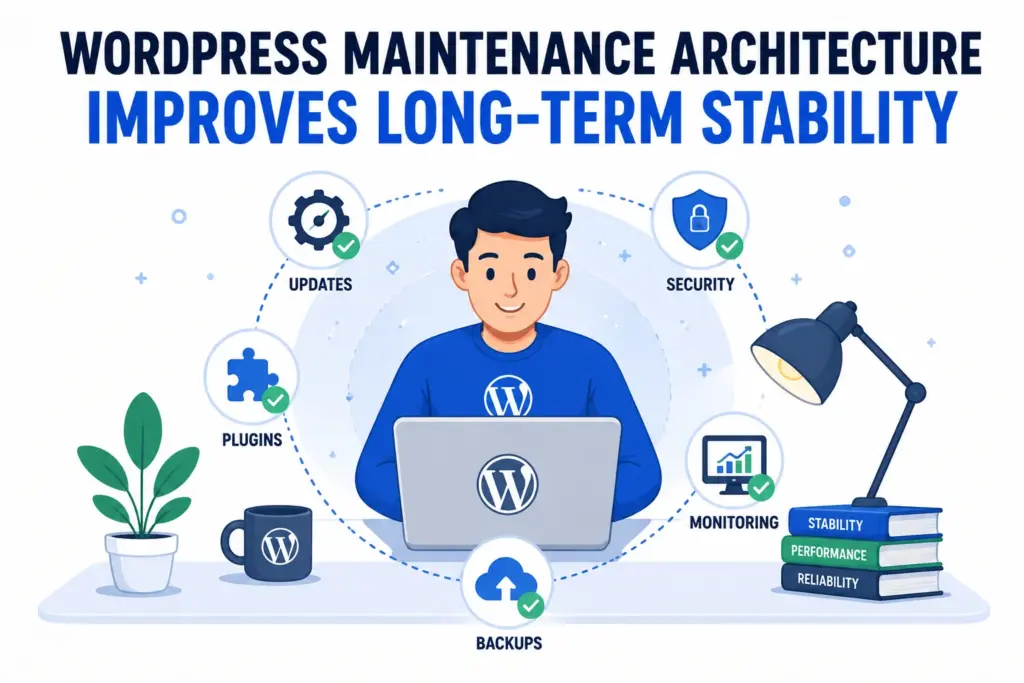
WordPress instability rarely begins with plugins alone. Most long-term maintenance problems originate from fragmented architecture, inconsistent update coordination, or unclear operational workflows. When WordPress environments lack structural organization, reliability declines gradually across performance, security, and deployment operations. Structure determines long-term stability. At Wisegigs.eu, WordPress audits consistently show that unstable websites are often caused by weak […]
Plugin Permission Isolation Reduces WordPress Security Exposure
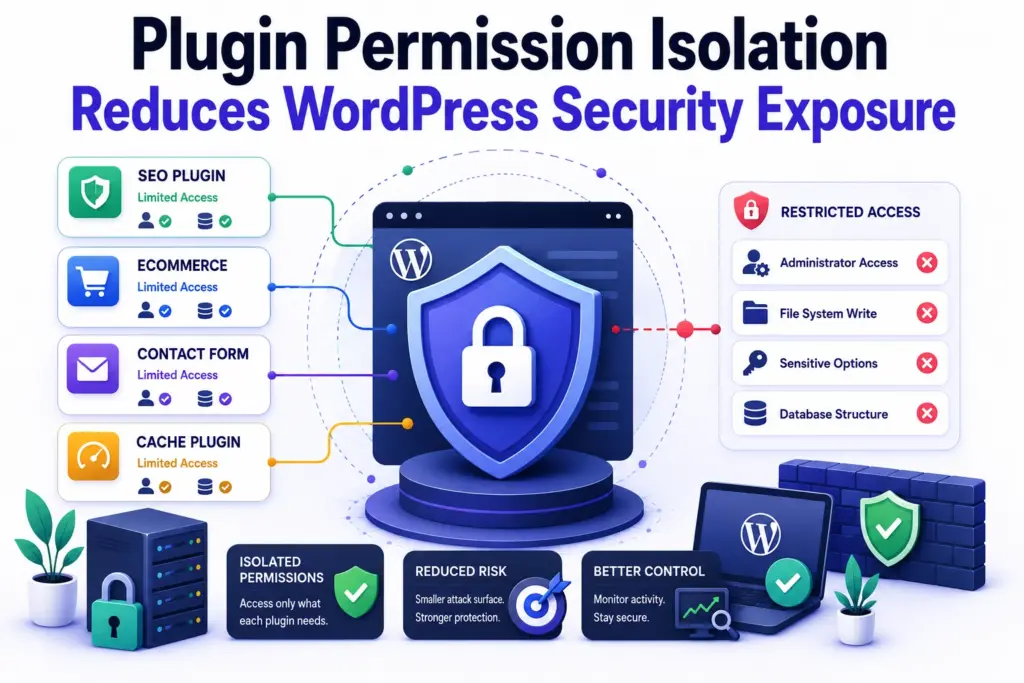
WordPress security rarely fails because of one catastrophic vulnerability. More commonly, risk accumulates gradually through excessive plugin permissions, outdated dependencies, and uncontrolled integrations. Initially, plugins solve operational problems quickly. However, unrestricted access increases infrastructure exposure over time. Many WordPress environments prioritize functionality over permission control. Consequently, plugins receive broader access than necessary for their actual […]
WordPress Security Depends on Execution Surface Control
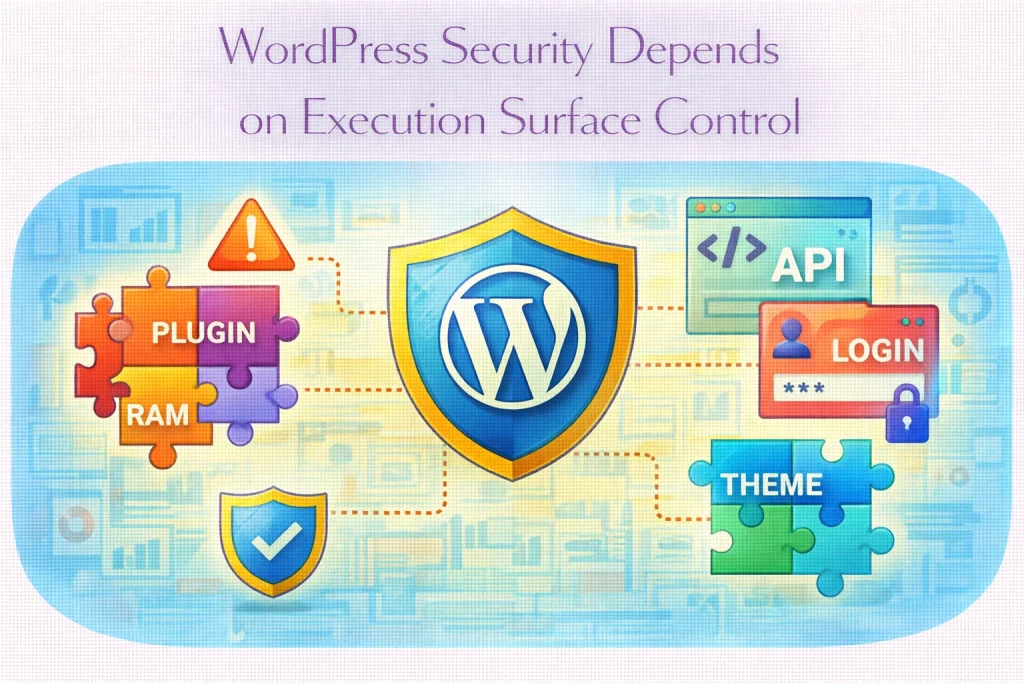
WordPress security depends on exposure boundaries. Security tools often focus on detection, filtering, or response mechanisms. However, the number of executable entry points strongly influences overall risk level. Each enabled component introduces additional logic paths that may be accessed intentionally or unintentionally. Execution surface determines attack opportunity. At Wisegigs.eu, security reviews frequently identify environments where […]
Reducing Attack Surface Improves WordPress Security More Than Plugins
WordPress security often begins with plugin installation. Many site owners add security plugins immediately after deployment. Firewalls, login protection tools, malware scanners, and activity monitors appear to provide immediate protection. These tools can be useful. However, security plugins do not reduce structural risk. At Wisegigs.eu, security audits frequently reveal WordPress environments where multiple protection layers […]
Hardening WordPress Requires Architectural Thinking
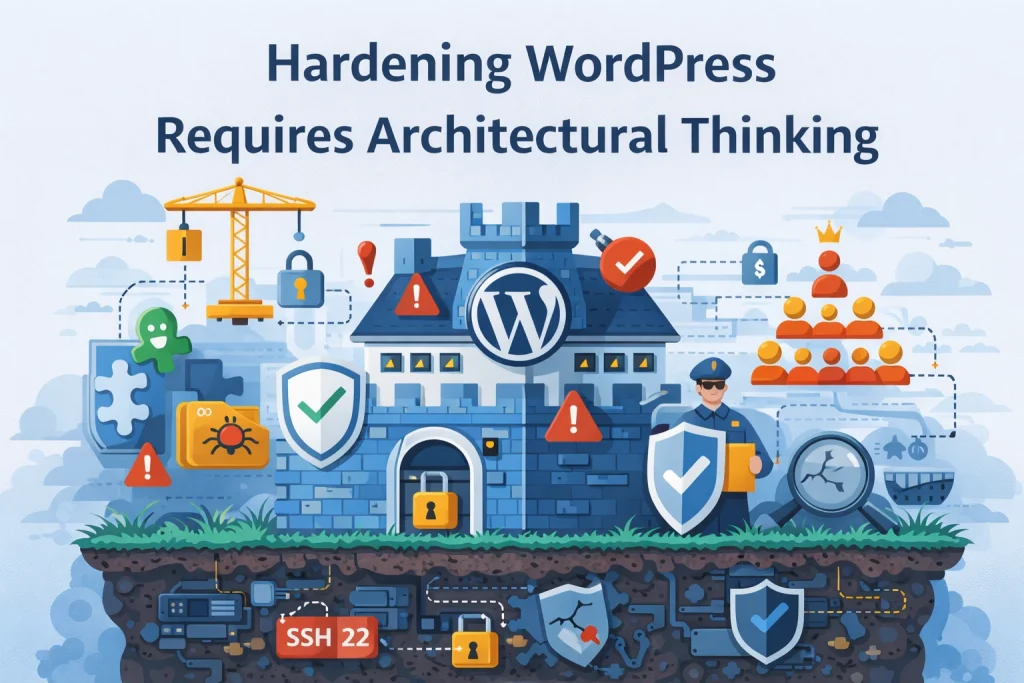
WordPress security is frequently treated as a tooling problem. Site owners install security plugins, enable firewalls, and apply recommended settings expecting comprehensive protection. Because these controls are easy to deploy, security often becomes associated with checklists rather than structural decisions. However, most compromises do not originate from missing plugins. At Wisegigs.eu, security investigations repeatedly reveal […]
How WordPress Security Issues Escalate Quietly
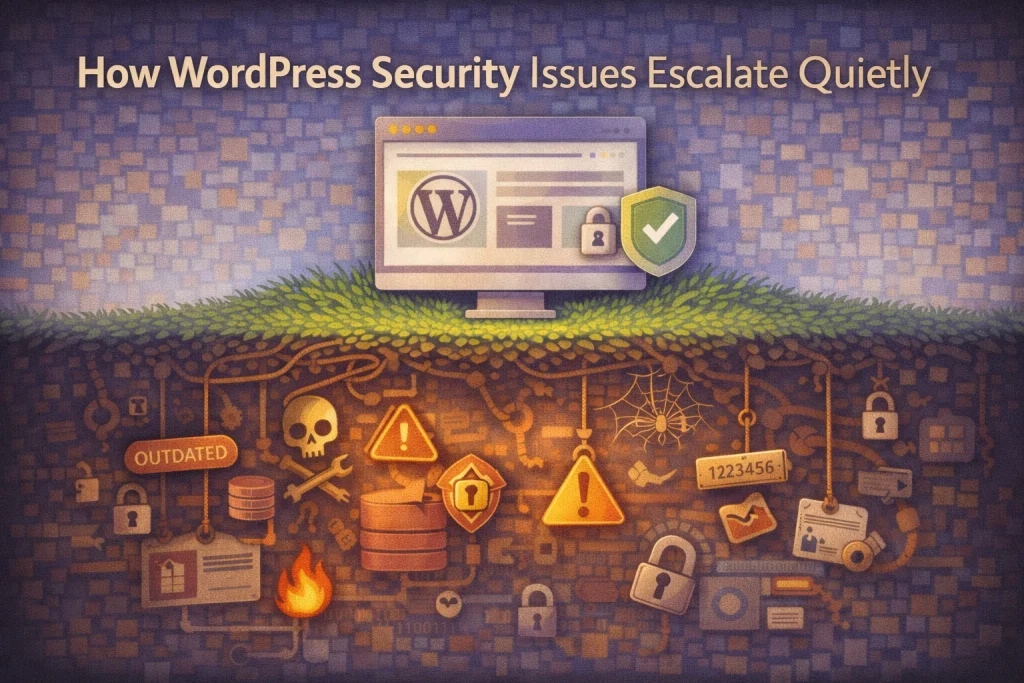
Most WordPress security failures do not begin with dramatic events. No alarms sound. No obvious breach occurs. The site continues to function, often without visible symptoms. Because everything appears stable, early warning signs are frequently ignored. Over time, however, small weaknesses accumulate. At Wisegigs.eu, many security incidents originate from conditions that existed long before detection. […]
How Poor Security Planning Increases Operational Risk
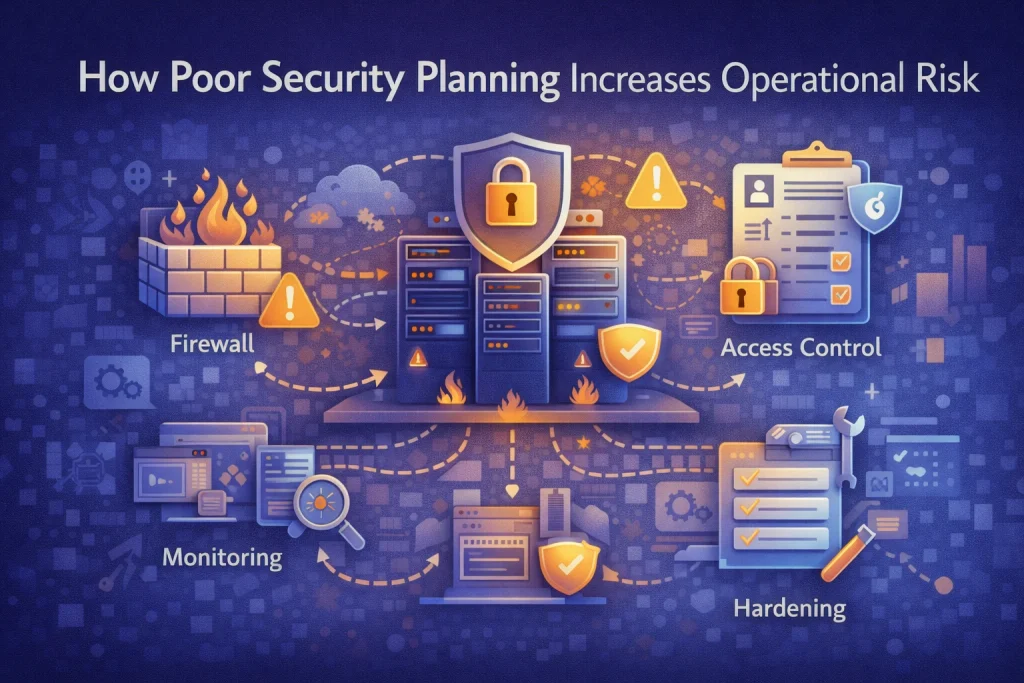
Security incidents rarely begin with an attack. They begin with assumptions. Systems appear stable. Updates work. Backups exist. Monitoring shows normal activity. Because nothing is visibly broken, security is often treated as a checklist rather than a strategy. At Wisegigs, most security issues we investigate are not caused by sophisticated attackers. They are caused by […]