
WordPress Security Depends on Execution Surface Control
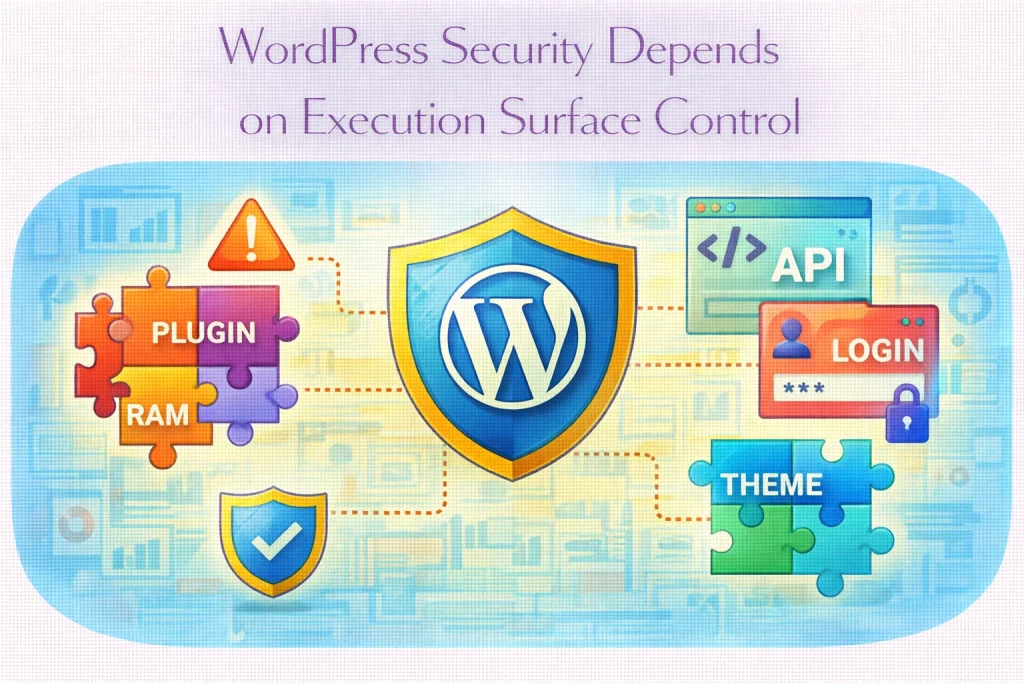
WordPress security depends on exposure boundaries. Security tools often focus on detection, filtering, or response mechanisms. However, the number of executable entry points strongly influences overall risk level. Each enabled component introduces additional logic paths that may be accessed intentionally or unintentionally. Execution surface determines attack opportunity. At Wisegigs.eu, security reviews frequently identify environments where […]
Reducing Attack Surface Improves WordPress Security More Than Plugins
WordPress security often begins with plugin installation. Many site owners add security plugins immediately after deployment. Firewalls, login protection tools, malware scanners, and activity monitors appear to provide immediate protection. These tools can be useful. However, security plugins do not reduce structural risk. At Wisegigs.eu, security audits frequently reveal WordPress environments where multiple protection layers […]
Hardening WordPress Requires Architectural Thinking
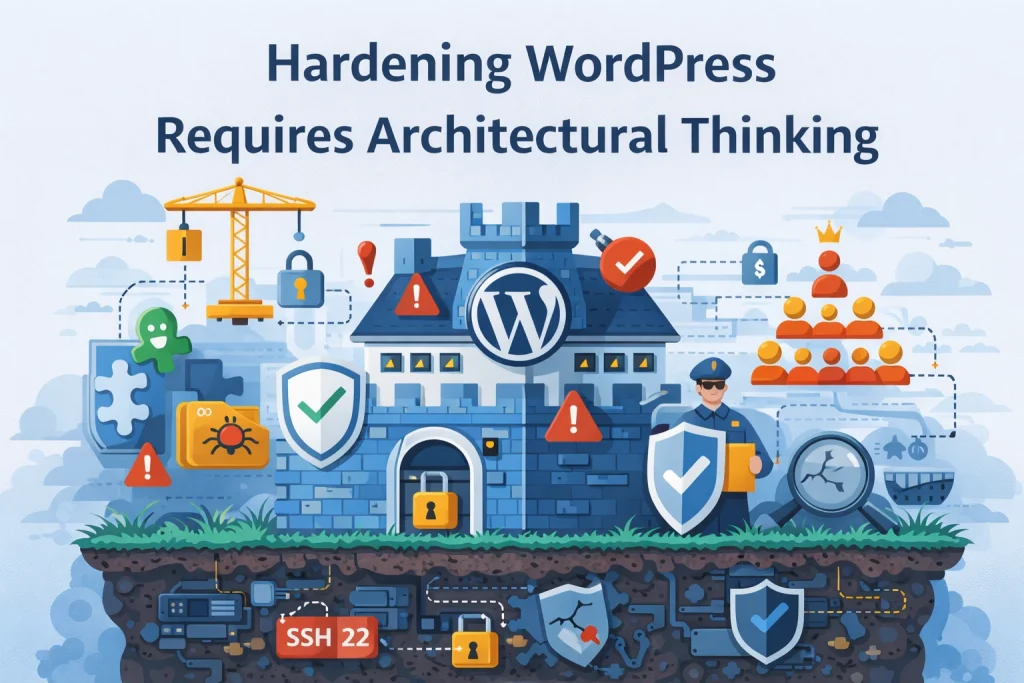
WordPress security is frequently treated as a tooling problem. Site owners install security plugins, enable firewalls, and apply recommended settings expecting comprehensive protection. Because these controls are easy to deploy, security often becomes associated with checklists rather than structural decisions. However, most compromises do not originate from missing plugins. At Wisegigs.eu, security investigations repeatedly reveal […]