
WordPress Hook Structure Influences Customization Predictability
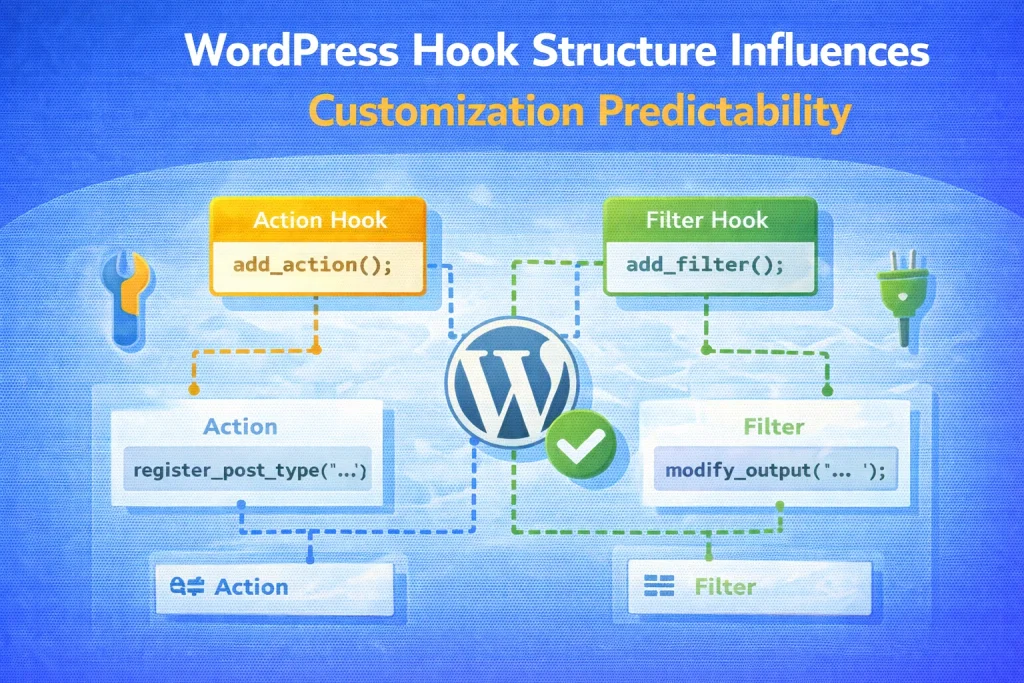
WordPress extensibility depends on execution predictability. Custom functionality interacts with core behavior through hooks. Hooks define when and how code executes during the WordPress lifecycle. Predictable hook usage reduces unintended side effects across themes, plugins, and integrations. Structure influences execution reliability. When hook placement remains consistent, customization remains stable. When hook logic becomes fragmented, interaction […]
WordPress Flexibility Introduces Structural Risk
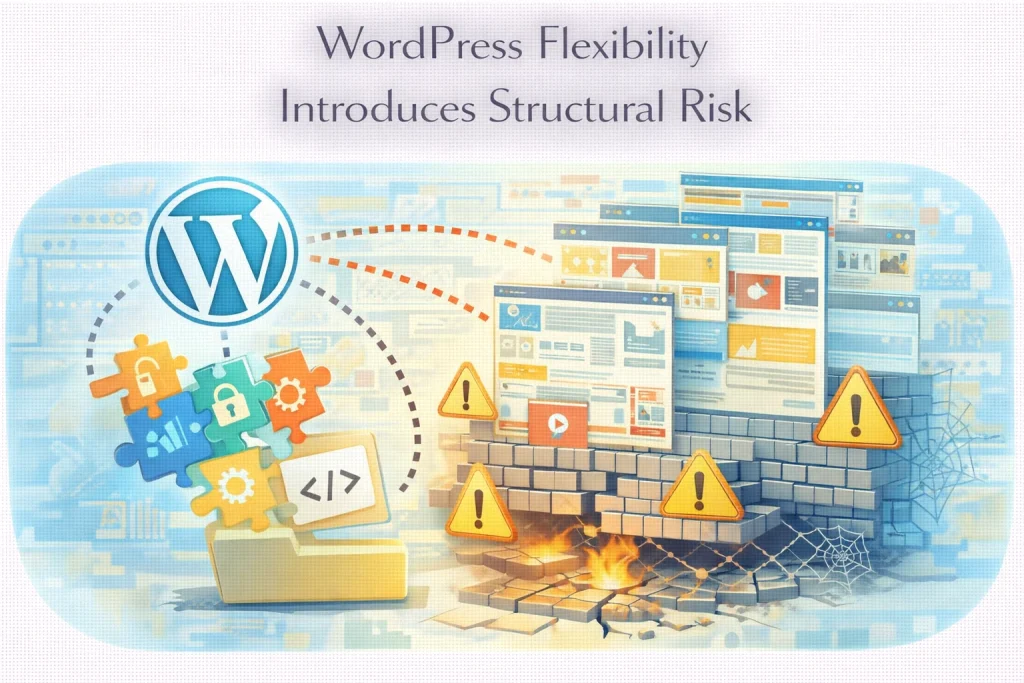
WordPress enables extensive customization. Themes, plugins, and custom code allow developers to modify functionality, appearance, and integration behavior. This flexibility supports diverse use cases, from simple content sites to complex ecommerce platforms. However, flexibility increases structural complexity. At Wisegigs.eu, technical audits frequently reveal WordPress environments where extensive customization introduces unpredictable interactions between components. Systems continue […]
Why WordPress Performance Problems Rarely Originate in Core
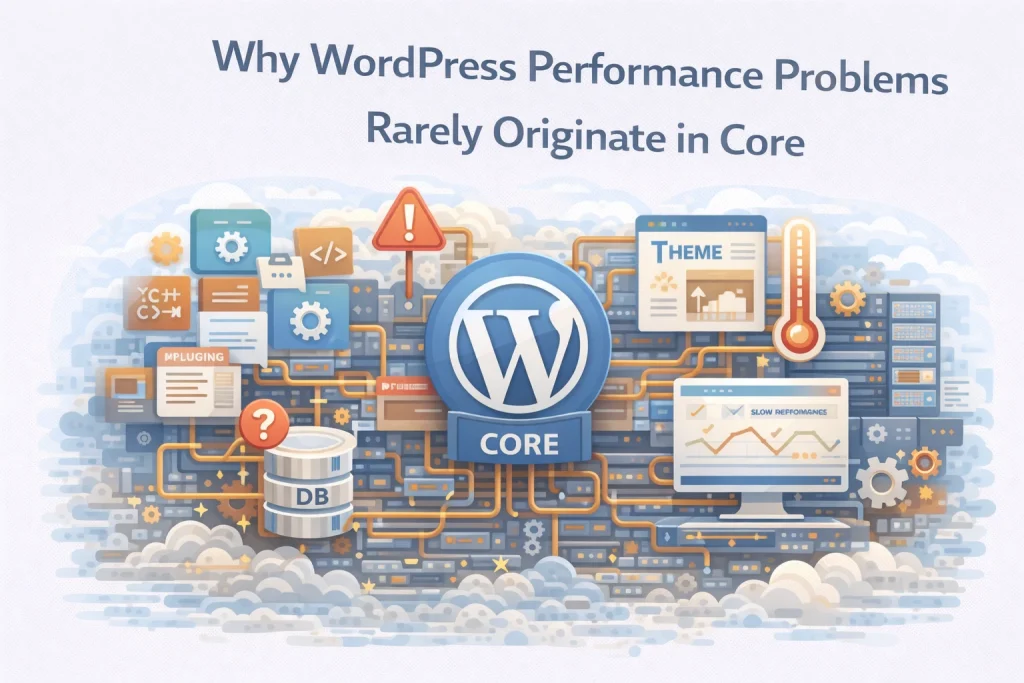
WordPress powers a significant portion of the web. Its architecture supports a wide range of applications, from small blogs to complex e-commerce platforms. Because of this flexibility, WordPress is frequently blamed when websites experience performance issues. However, WordPress core is rarely the primary cause of slow sites. At Wisegigs.eu, performance audits consistently show that most […]
Why Small Snippets Often Cause Large Failures
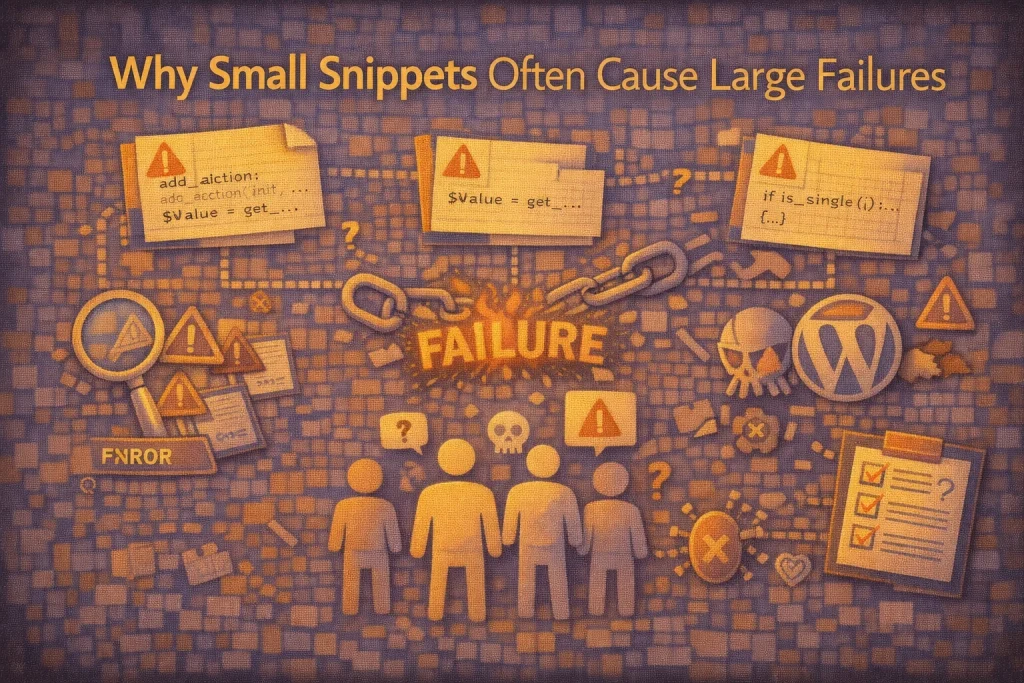
WordPress snippets are typically introduced as minor improvements. A small tweak adjusts behavior. A quick fix resolves an edge case. A copied fragment adds missing functionality. Because these changes appear limited in scope, their long-term impact is rarely questioned. However, snippets frequently become the origin of significant failures. At Wisegigs.eu, many WordPress stability investigations reveal […]
How WordPress Snippets Quietly Accumulate Risk
Most WordPress sites eventually rely on custom snippets. In the early stages, teams usually see these snippets as harmless additions. A small tweak fixes a problem, or a quick adjustment adds missing functionality. Because the site continues to work, the change rarely triggers concern. Over time, however, those small fixes stop behaving like temporary solutions. […]