
Monitoring Strategy Structure Improves Infrastructure Stability
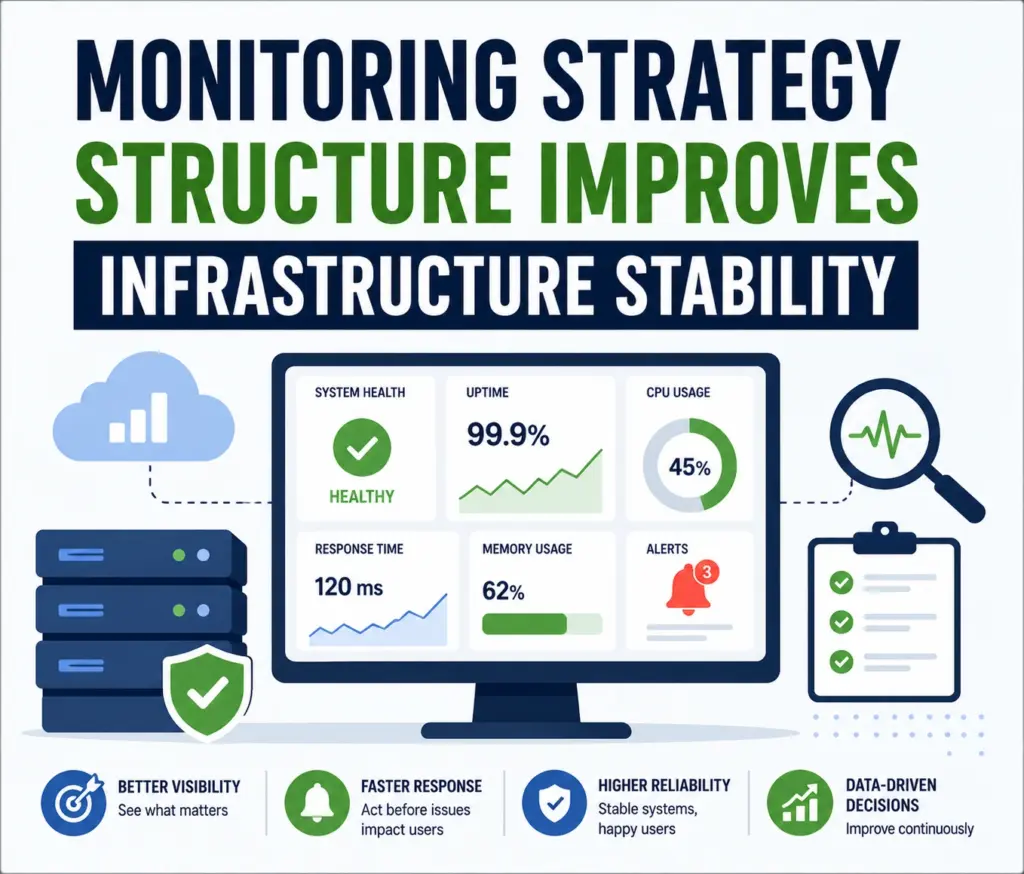
Monitoring failures rarely come from missing tools. Most instability occurs because monitoring systems are fragmented, inconsistent, or poorly structured. When visibility is incomplete or misaligned, systems behave unpredictably under load or failure conditions. Structure determines observability effectiveness. At Wisegigs.eu, infrastructure audits consistently show that instability is often caused by weak monitoring strategy rather than lack […]
Alert Logic Structure Reduces Incident Escalation Risk
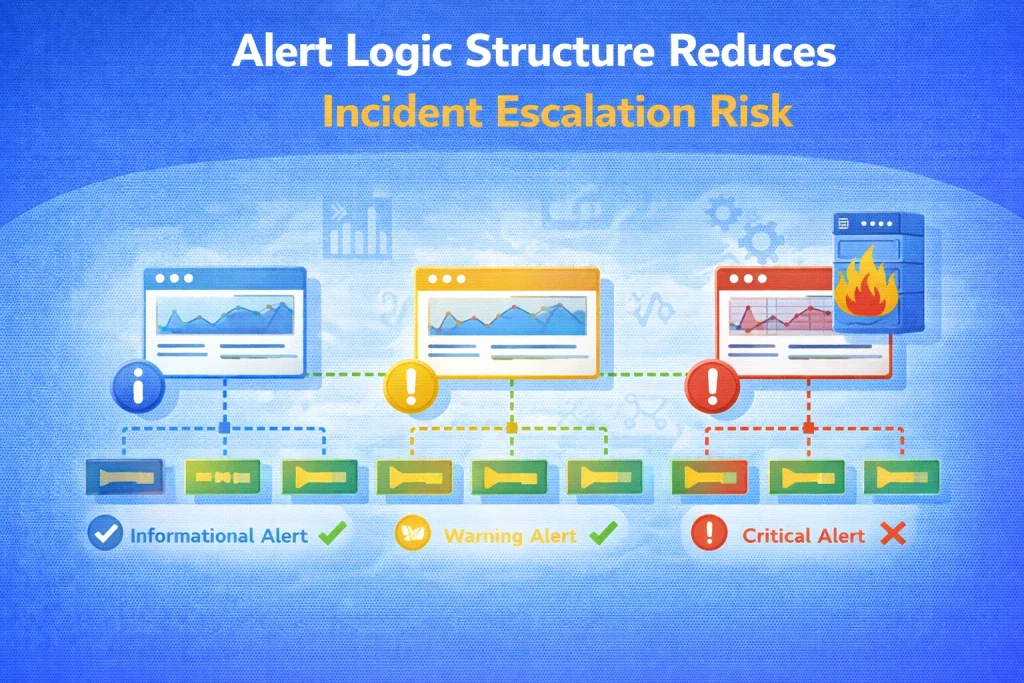
Infrastructure stability depends on detection timing accuracy. Incidents rarely become critical immediately. Instead, failures evolve through progressive degradation patterns. Early signals often indicate abnormal system behavior before visible outages occur. Alert logic influences detection timing. When alert thresholds remain poorly defined, signals generate noise or remain undetected. Both conditions reduce response effectiveness. At Wisegigs.eu, infrastructure […]
Alerting Noise Often Hides Real System Failures
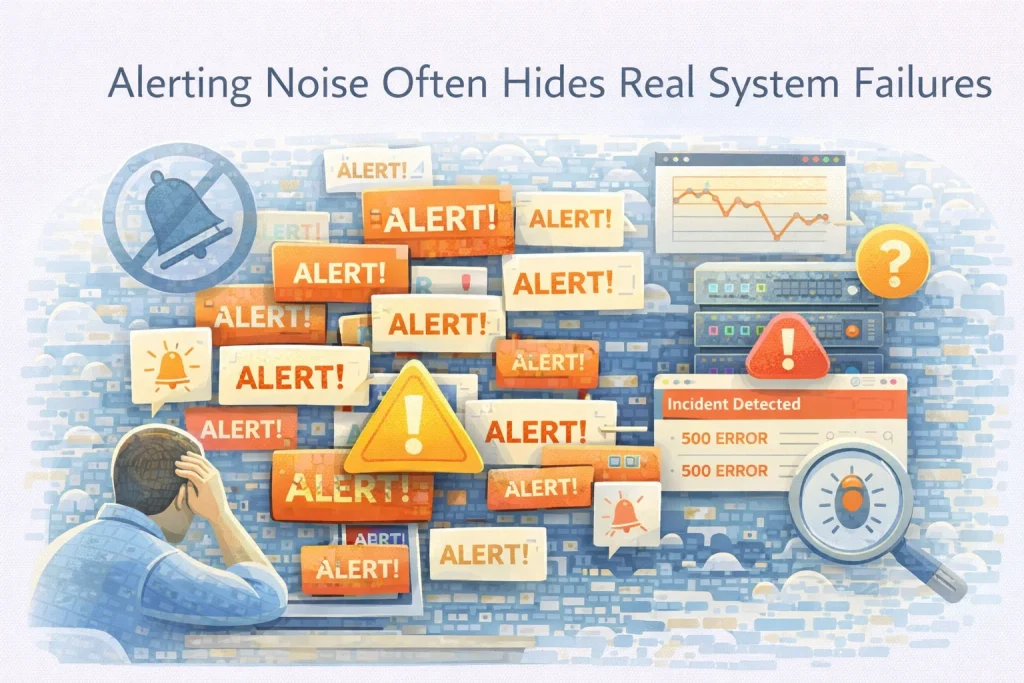
Monitoring systems generate alerts. When metrics cross predefined thresholds, systems notify engineers about potential issues. In theory, this mechanism ensures rapid detection of incidents and protects system reliability. However, alerting systems often produce too much noise. At Wisegigs.eu, infrastructure reviews frequently reveal environments where alert channels are saturated with notifications. Engineers receive frequent warnings about […]