
Alerting Noise Often Hides Real System Failures
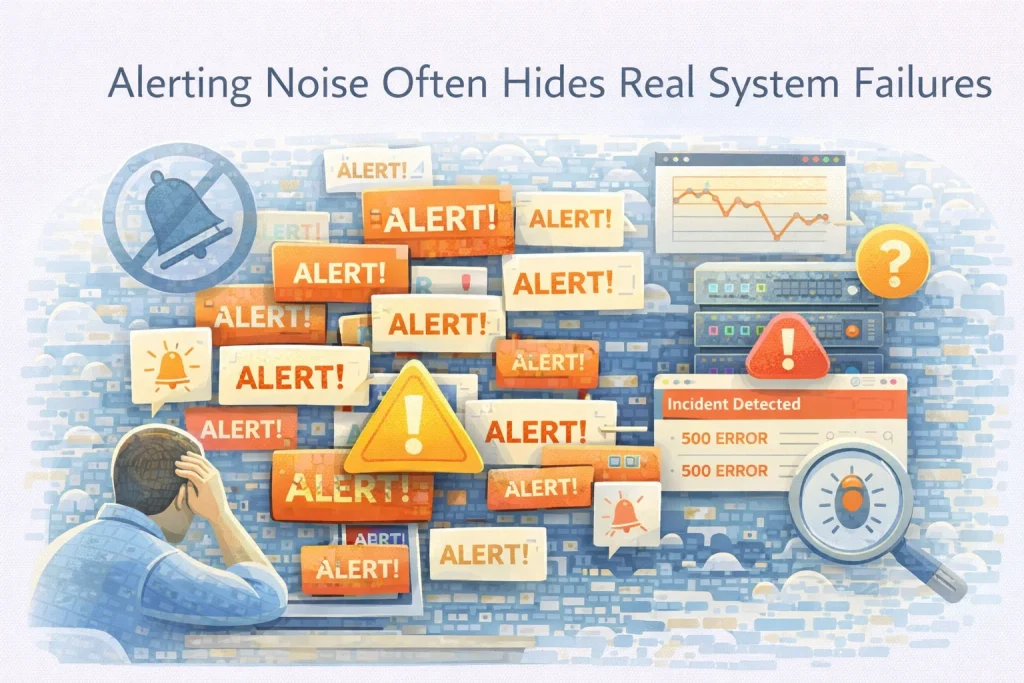
Monitoring systems generate alerts. When metrics cross predefined thresholds, systems notify engineers about potential issues. In theory, this mechanism ensures rapid detection of incidents and protects system reliability. However, alerting systems often produce too much noise. At Wisegigs.eu, infrastructure reviews frequently reveal environments where alert channels are saturated with notifications. Engineers receive frequent warnings about […]
Why Observability Changes Incident Response Dynamics

System availability is frequently mistaken for system health. Servers respond to requests. Dashboards show green indicators. Resource utilization appears acceptable. Consequently, many teams assume reliability remains intact as long as uptime persists. However, uptime alone does not define operational stability. At Wisegigs.eu, incident investigations repeatedly reveal environments where systems remain technically available while failure conditions […]
What SRE Teaches Us About System Stability
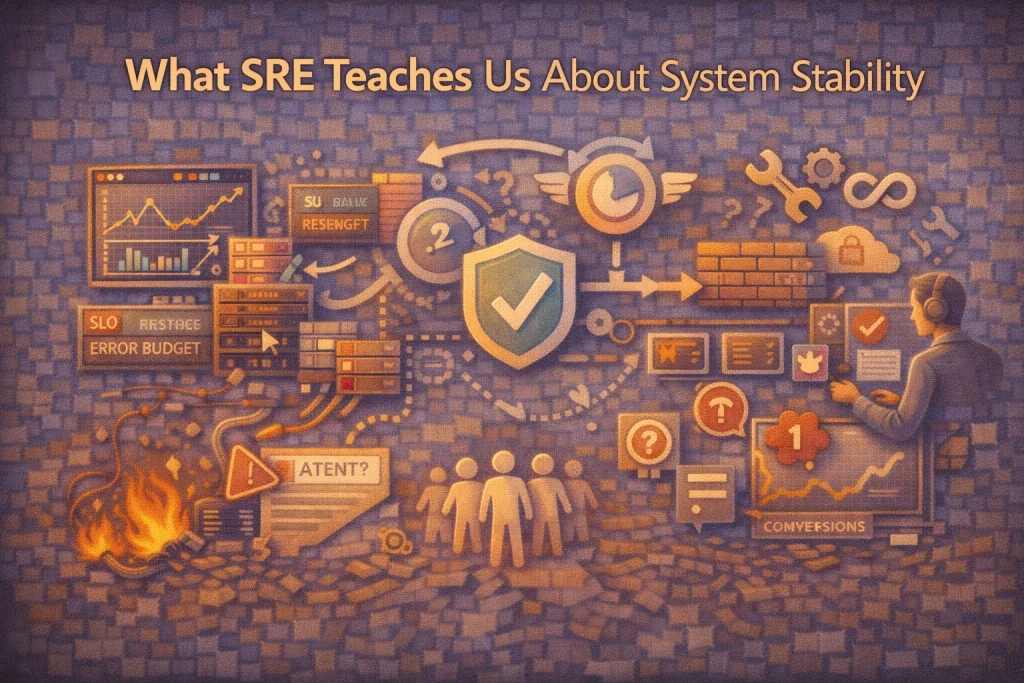
System stability is often misunderstood. Many teams associate reliability with uptime percentages, server capacity, or redundancy layers. Because these factors are visible and measurable, stability is frequently treated as a hardware or infrastructure concern rather than a systemic property. Site Reliability Engineering offers a different perspective. Instead of focusing solely on preventing failure, SRE emphasizes […]
What SRE Teaches Us About Reliable Hosting
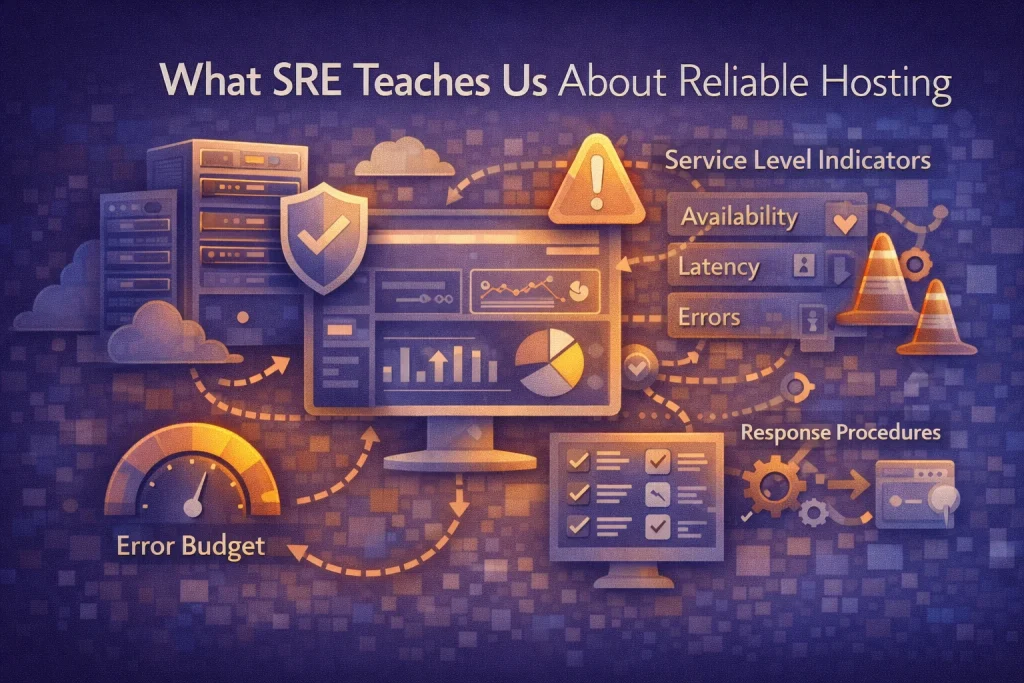
Reliable hosting is often misunderstood. Many teams focus on uptime percentages, server specs, or monitoring dashboards. As long as services are running, the system is considered healthy. Site Reliability Engineering (SRE) challenges this thinking. At Wisegigs.eu, we see that the most reliable hosting environments are not the ones with the most metrics, but the ones […]