
Why SRE Is About Prevention, Not Reaction
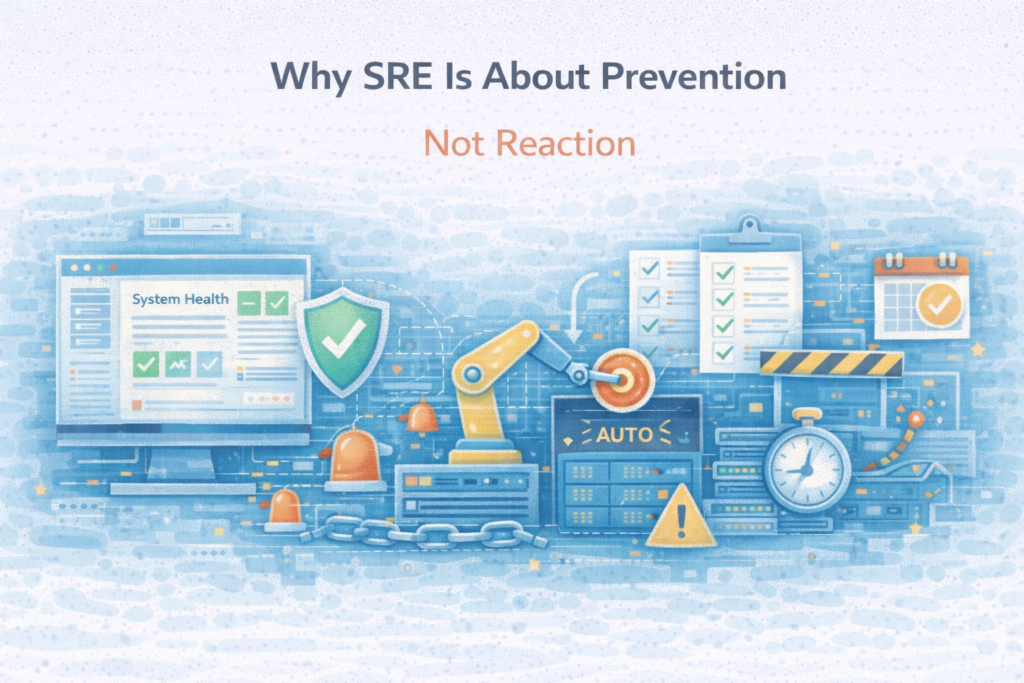
Most teams discover Site Reliability Engineering during an incident. Something breaks. Alerts fire. Users complain. Engineers scramble to restore service. Afterward, the incident is labeled an “outage,” and monitoring thresholds get tweaked. That approach misses the point. At Wisegigs.eu, SRE is not treated as a faster way to react to failures. It is treated as […]
Most WordPress Security Problems Are Operational
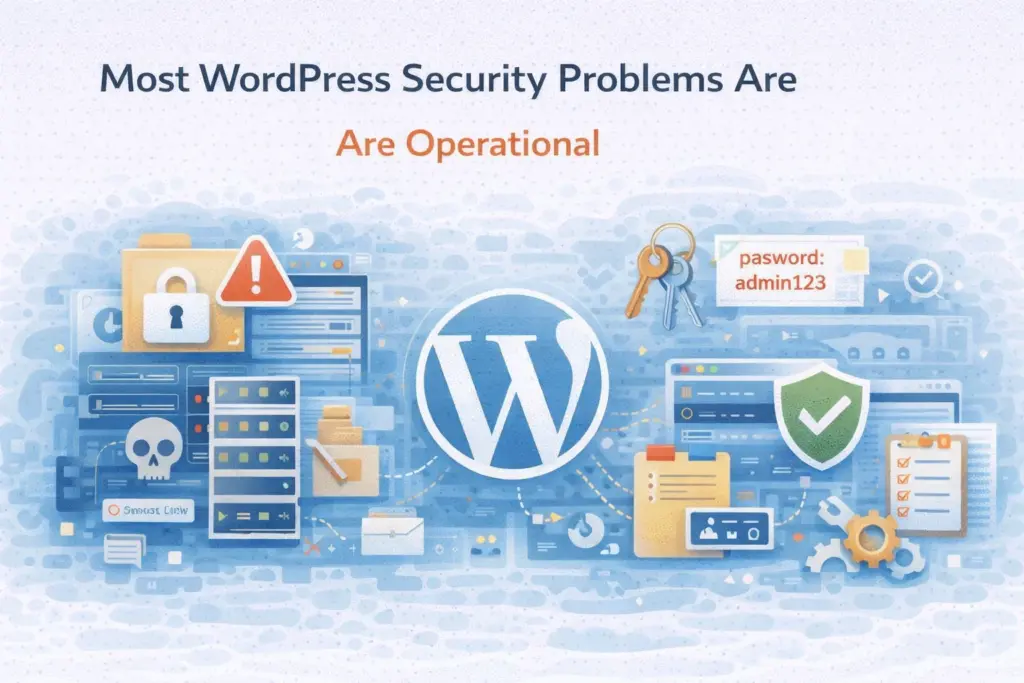
When WordPress sites get compromised, the explanation often sounds familiar.A zero-day vulnerability. A sophisticated attacker. An unavoidable breach. However, in real-world incidents, most WordPress security problems do not start with hackers. Instead, they begin with operational gaps that quietly accumulate over time. At Wisegigs.eu, security incidents almost always trace back to decisions made long before […]
VPS Hosting Is Not “Old School” — It’s Just Misunderstood
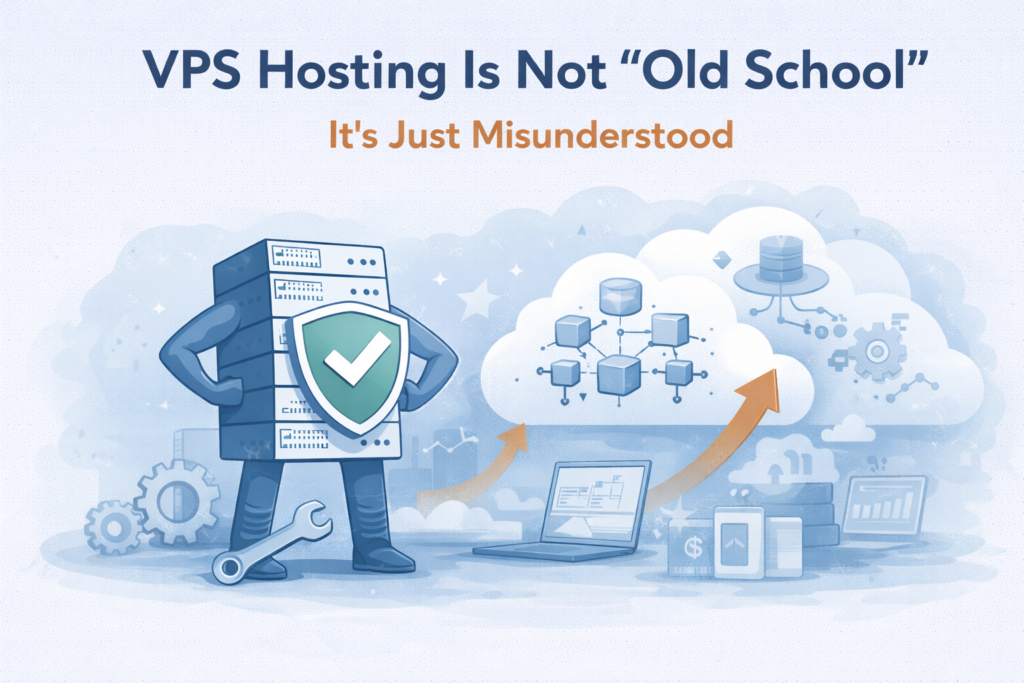
VPS hosting is often described as outdated. However, that perception does not come from technical limitations. Instead, it comes from comparing VPS hosting to cloud platforms using the wrong criteria. In many discussions, VPS hosting sits awkwardly between “cheap shared hosting” and “modern cloud infrastructure.” As a result, teams treat it as a temporary step […]
Hardening WordPress Hosting: What Shared Setups Can’t Protect You From
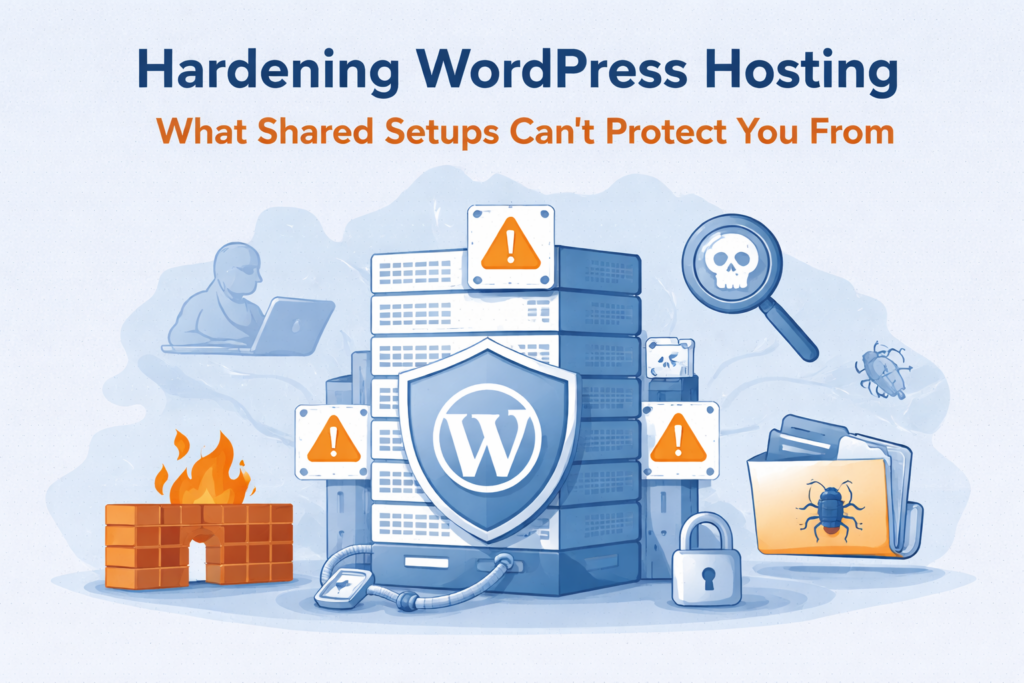
Most WordPress security advice focuses on plugins, passwords, and updates. That advice is not wrong — it’s just incomplete. A large percentage of compromised WordPress sites were technically “secured” at the application level. Plugins were installed. Updates were current. Firewalls were enabled. Yet breaches still occurred. The reason is simple: security hardening that stops at […]
Silent Failures in WordPress Hosting: What Monitoring Misses
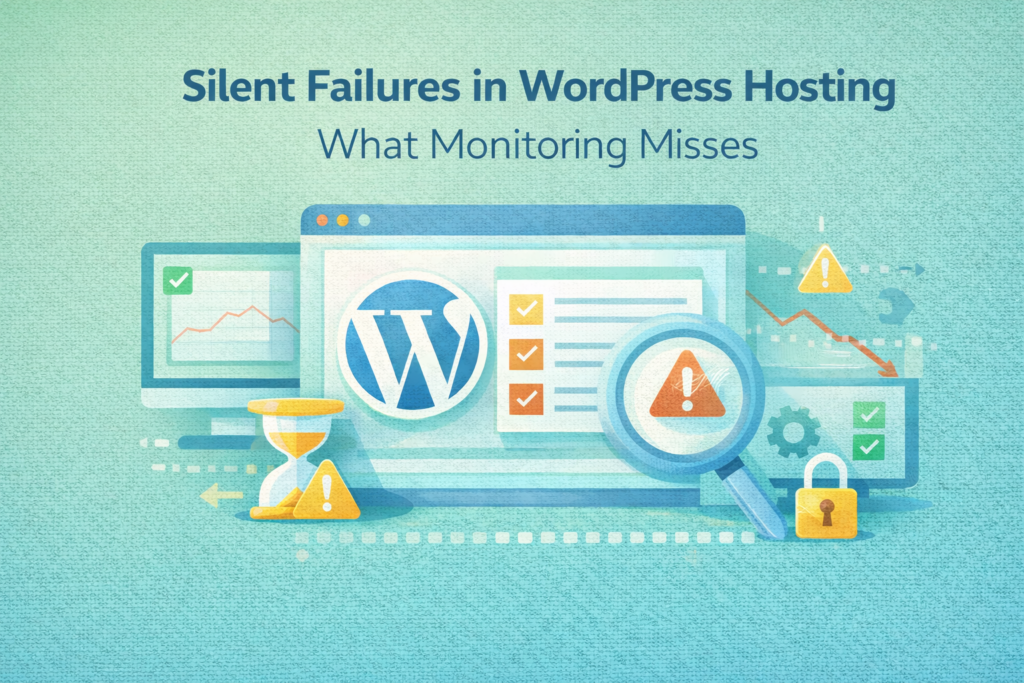
Most WordPress outages don’t start with a crash. They start quietly — with performance degradation, partial failures, and user-visible issues that never trigger alerts. Pages still load. Uptime checks stay green. But conversions drop, error rates climb, and user trust erodes. At Wisegigs.eu, we see silent failures as the most expensive class of hosting problems, […]
From Firewall to WAF: Protecting WordPress at the Edge

Most WordPress security discussions focus on plugins, passwords, and admin hardening. While those matter, the most effective security improvements often happen before traffic ever reaches WordPress. That’s where edge protection comes in. Firewalls, rate limiting, and Web Application Firewalls (WAFs) form the first and most scalable line of defense against attacks, bots, abuse, and traffic […]
How to Measure WordPress Performance Correctly at Scale
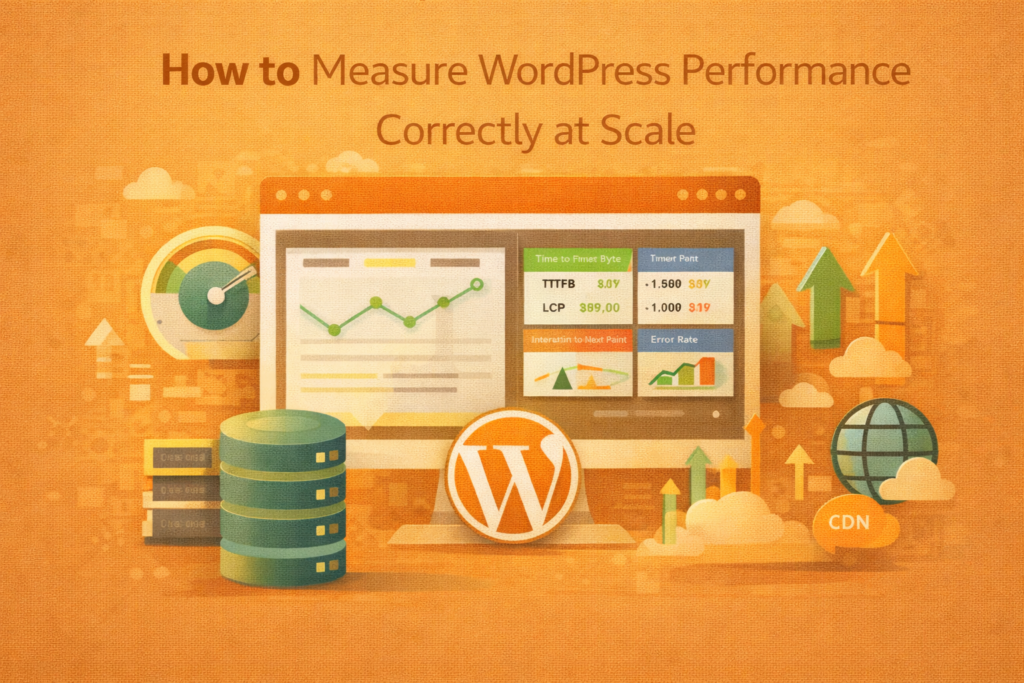
At low traffic, WordPress performance issues are obvious. Pages feel slow, errors appear, complaints arrive quickly. At scale, performance problems are subtle, distributed, and delayed. By the time users notice, the damage has already accumulated. The biggest mistake teams make is relying on the same metrics that worked for small sites. At Wisegigs.eu, performance measurement […]
When to Move WordPress From Shared Hosting to VPS
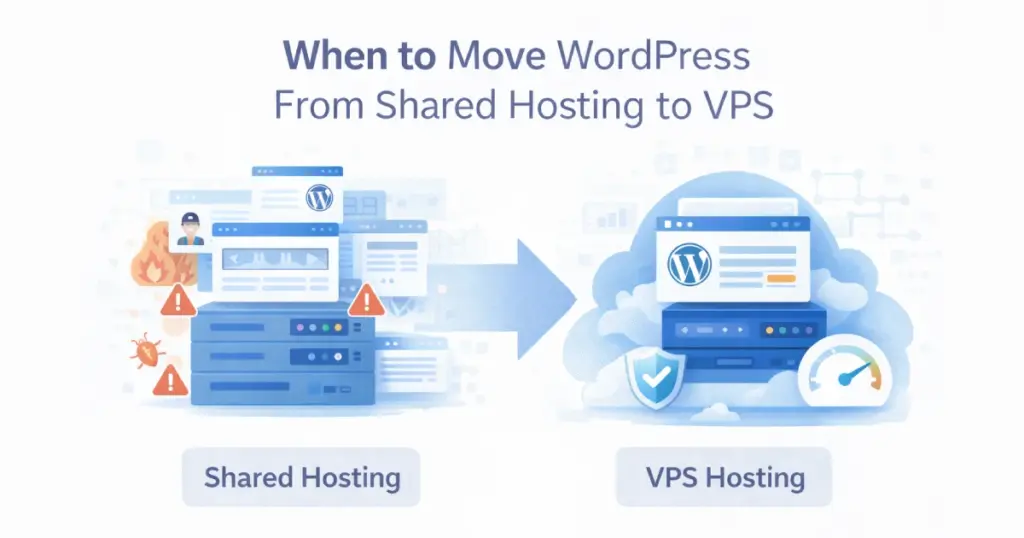
Shared hosting is often where WordPress sites begin — it’s affordable, simple, and good enough at low traffic levels. But as a site grows, shared hosting becomes a hidden bottleneck. Performance slows, reliability drops, and troubleshooting turns into guesswork because resources are shared with dozens or hundreds of other sites. The real challenge is knowing […]
WordPress Hosting Security Checklist: From Server to Application
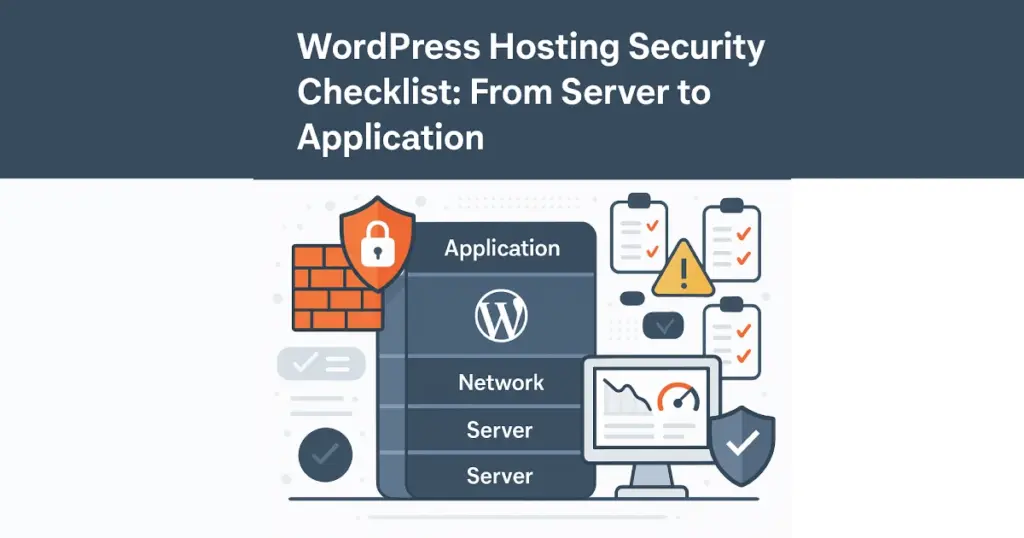
Security in WordPress hosting is not a single setting or plugin — it’s a layered system that starts at the server and extends all the way to the application and data level. Most security incidents happen not because WordPress is insecure by default, but because critical layers are misconfigured, outdated, or ignored. At Wisegigs.eu, we […]
Secrets Management in CI/CD for WordPress Hosting Teams
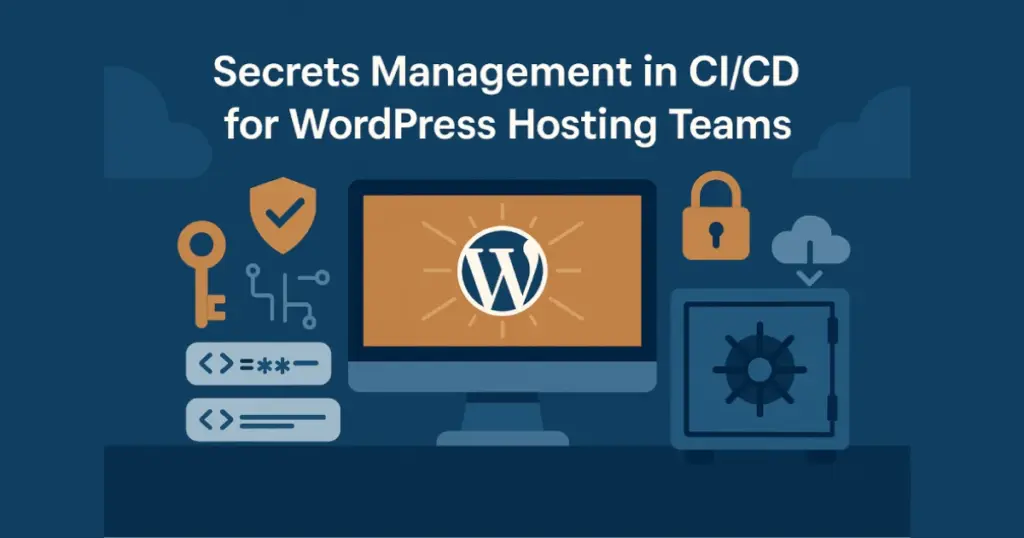
Illustration showing secure CI/CD pipelines with encrypted keys, vault icons, and WordPress deployment symbols representing secrets protection across automated workflows. Automated releases are now central to modern WordPress development. Themes, plugins, assets, and server configurations move through CI/CD pipelines rapidly — but every automated step relies on sensitive credentials. When these secrets are mishandled, a […]