
Building WordPress Performance the Right Way
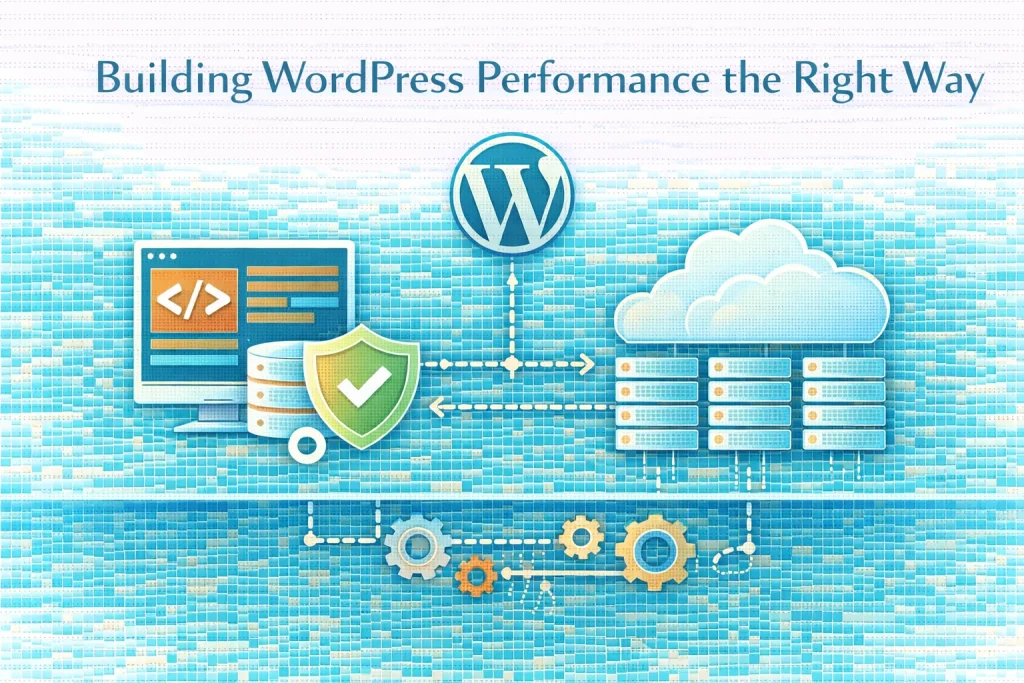
WordPress performance problems rarely start with hosting. In most cases, they begin much earlier, during development. Teams add features quickly, ship without measuring impact, and rely on caching to cover structural issues. At first, everything feels fast enough. Over time, however, pages slow down, backend actions lag, and stability becomes harder to maintain. At Wisegigs.eu, […]
Why “It Works” Is Not a WordPress Strategy
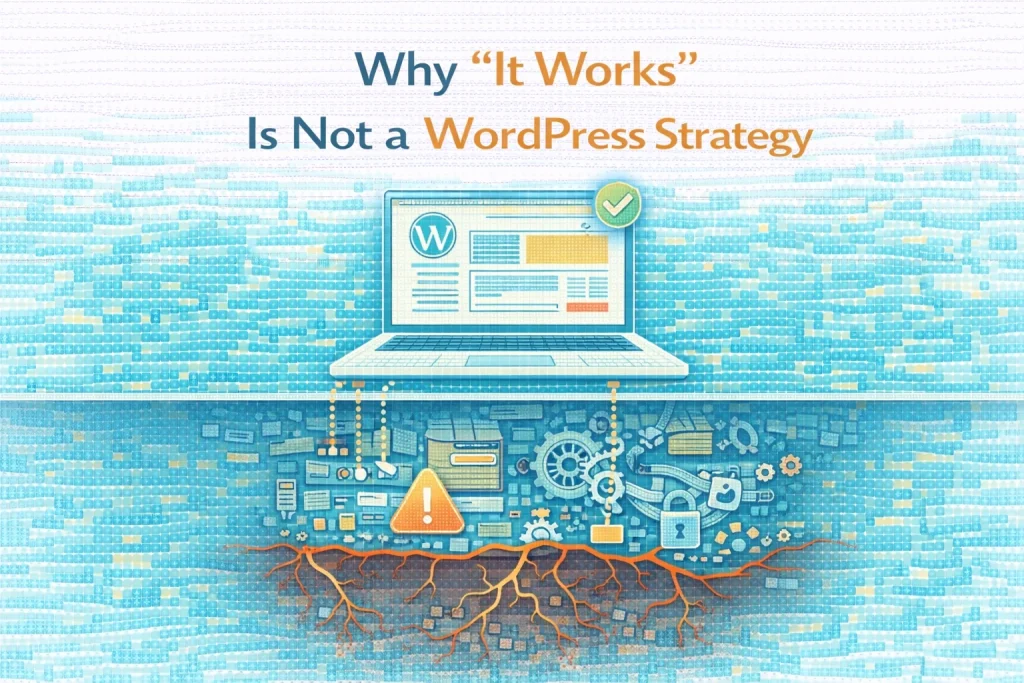
“It works” is the most common justification in WordPress development. The site loads. Pages render. Clients can publish content. From the outside, everything appears fine. As a result, development decisions are rarely questioned as long as nothing is visibly broken. At Wisegigs.eu, many WordPress failures begin exactly this way. Systems that “work” today quietly accumulate […]
How Poor CI/CD Design Increases Incident Frequency
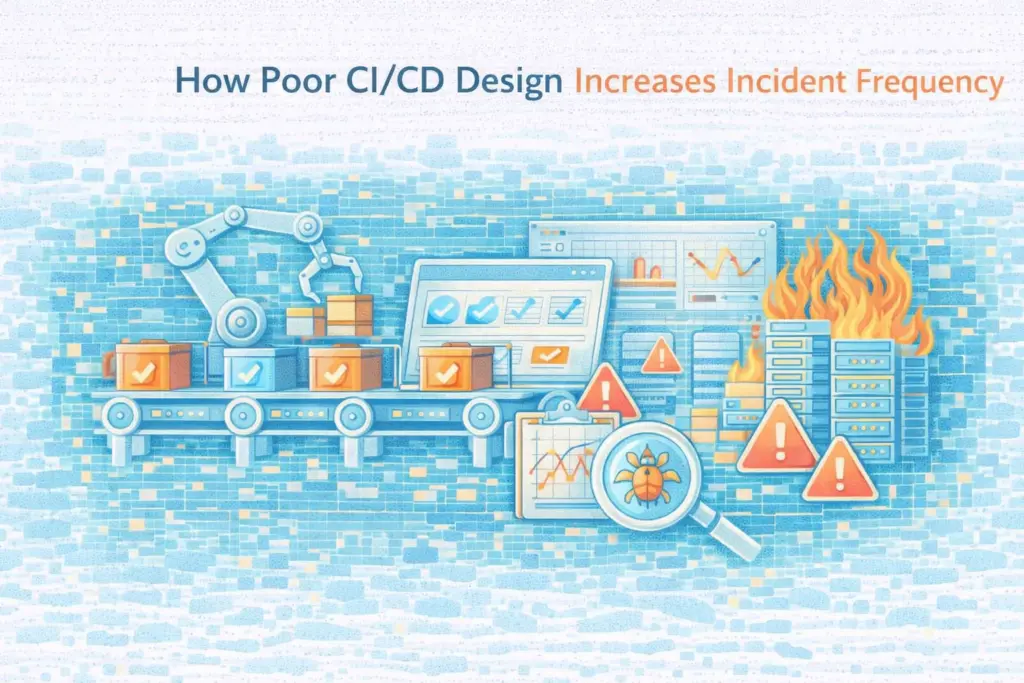
CI/CD pipelines are meant to reduce risk. They automate deployments, enforce consistency, and remove manual steps that cause human error. In theory, better pipelines should lead to fewer incidents and faster recovery. In practice, many teams experience the opposite. At Wisegigs.eu, a significant number of production incidents are not caused by bugs alone. They are […]
How Poor Hardening Creates False Confidence
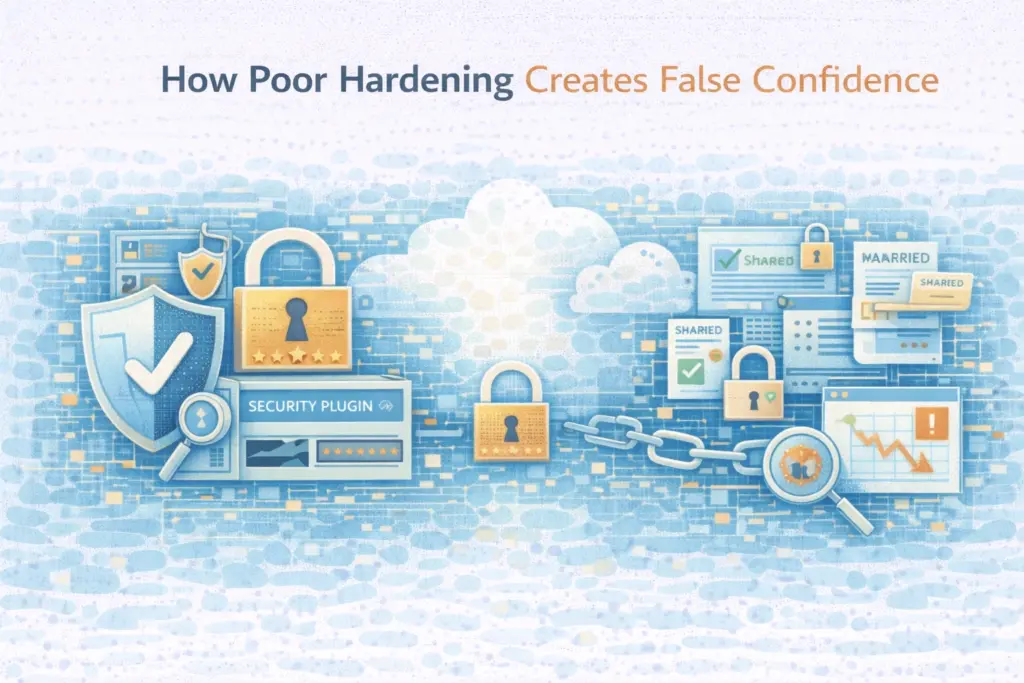
Security hardening is often treated as a checklist. Disable XML-RPC.Install a security plugin.Change the admin URL.Lock down file permissions. Once these steps are complete, teams feel protected. That confidence is dangerous. At Wisegigs.eu, many WordPress incidents occur on sites that were already “hardened.” Not because hardening is useless, but because poor hardening creates a false […]
Common Performance Mistakes in WordPress Development
WordPress performance problems rarely come from one catastrophic mistake. Instead, they emerge from a series of small development decisions that seem reasonable in isolation but compound over time. Pages get heavier. Requests get slower. Caching becomes less effective. Eventually, performance work turns into constant firefighting. At Wisegigs.eu, performance issues are almost never caused by a […]
Why WordPress Development Often Ignores Maintainability
WordPress development usually starts with good intentions. A feature request. A deadline. A client requirement. A plugin that “just works.” Over time, however, many WordPress sites become increasingly fragile, harder to change, and risky to maintain. This is rarely because developers lack skill.It happens because maintainability is deprioritized in favor of speed and visible progress. […]
Safe WordPress Snippets Every Site Eventually Needs
Most WordPress sites eventually accumulate custom code. Sometimes it starts with a small tweak. Sometimes with a quick fix copied from a tutorial. Over time, those snippets become part of the site’s behavior — often without documentation, ownership, or review. At Wisegigs.eu, many WordPress issues we diagnose originate from well-intentioned snippets that were never designed […]
Why WordPress Sites Fail After “Small” Code Changes
Most WordPress failures don’t come from major rewrites. They come from small, confident changes. A single line added to functions.php.A quick filter adjustment.A “temporary” snippet copied from Stack Overflow. Nothing dramatic happens at first. The site still loads. Editors continue working. Traffic looks normal. Then, days or weeks later, something breaks — often under load, […]
Most Deployment Pipelines Break for the Same Reasons
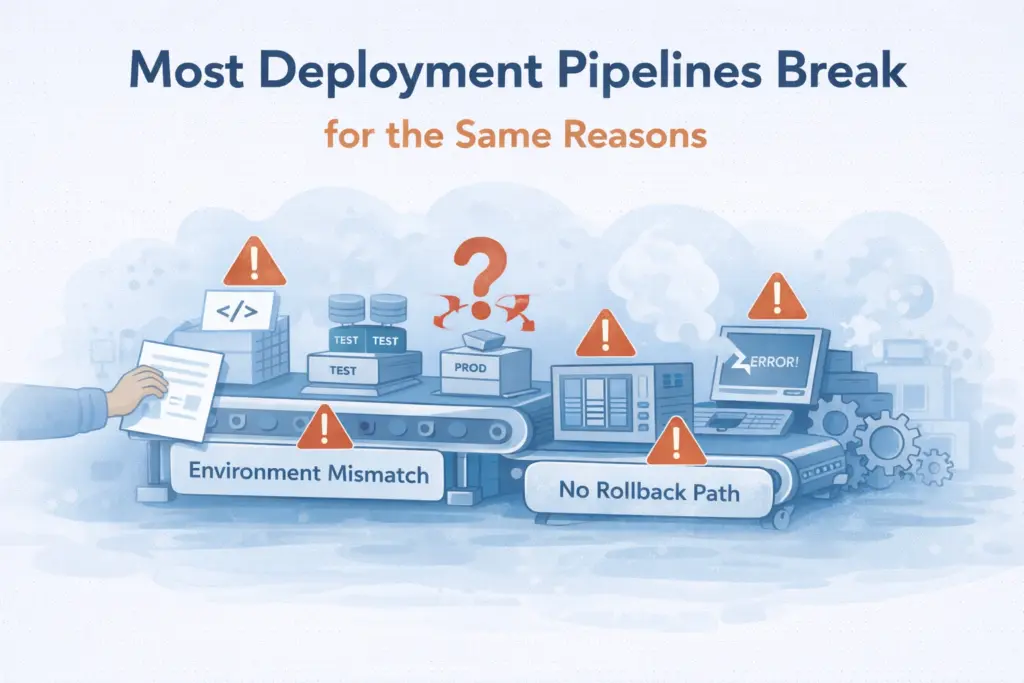
Most deployment pipelines do not fail because teams lack tooling. They fail because pipelines are treated as delivery accelerators instead of risk control systems. On paper, CI/CD pipelines promise faster releases, fewer errors, and smoother deployments. In reality, many teams experience the opposite: brittle releases, late-night rollbacks, and growing distrust in automation. At Wisegigs.eu, we […]
How Caching Breaks Dynamic WordPress Features (And How to Fix It)
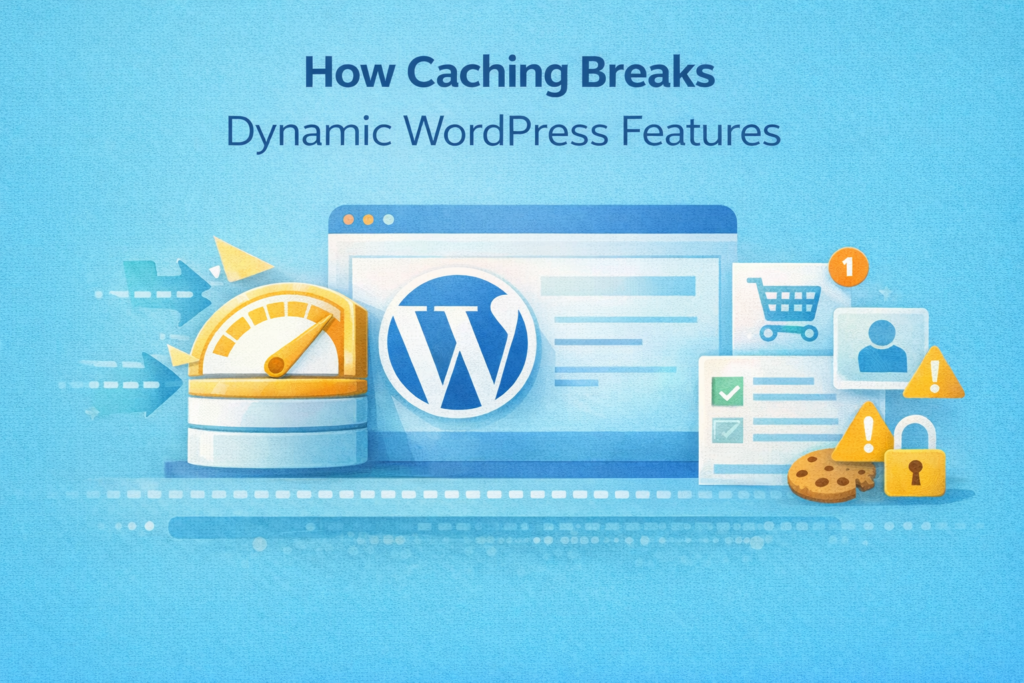
Caching is essential for WordPress performance — but when implemented incorrectly, it quietly breaks dynamic behavior. Logged-in user states leak, carts reset, personalization disappears, forms misbehave, and conversion funnels silently fail. The worst part?The site still looks “fast.” At Wisegigs.eu, a large portion of WordPress performance audits involve undoing broken caching logic rather than adding […]