What SRE Teaches Us About System Stability

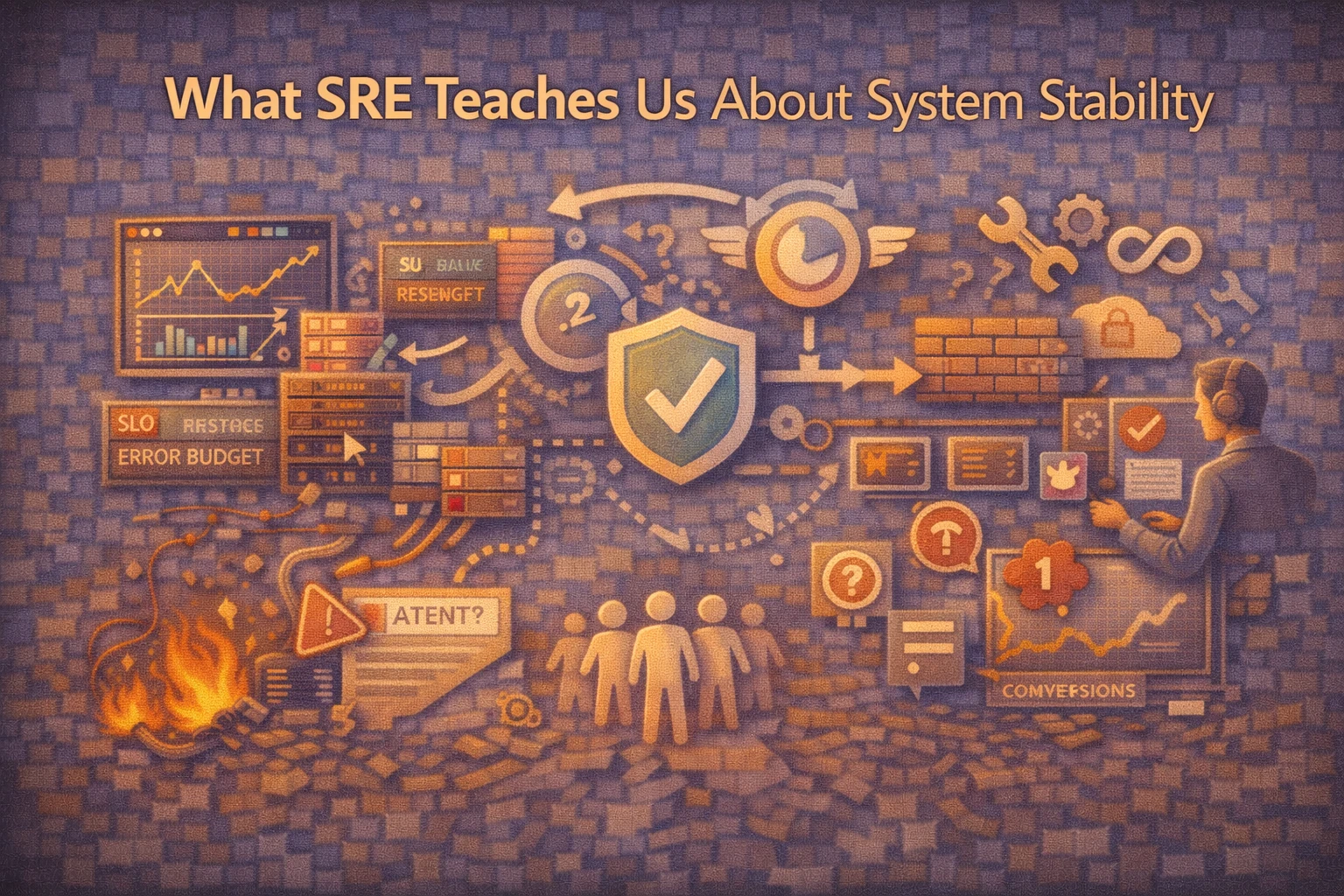
Flat illustration showing Site Reliability Engineering concepts improving system stability, monitoring visibility, and failure recovery.

System stability is often misunderstood. Many teams associate reliability with uptime percentages, server capacity, or redundancy layers. Because these factors are visible and measurable, stability is frequently treated as a hardware or infrastructure concern rather than a systemic property. Site Reliability Engineering offers a different perspective. Instead of focusing solely on preventing failure, SRE emphasizes […]

What SRE Teaches Us About Reliable Hosting

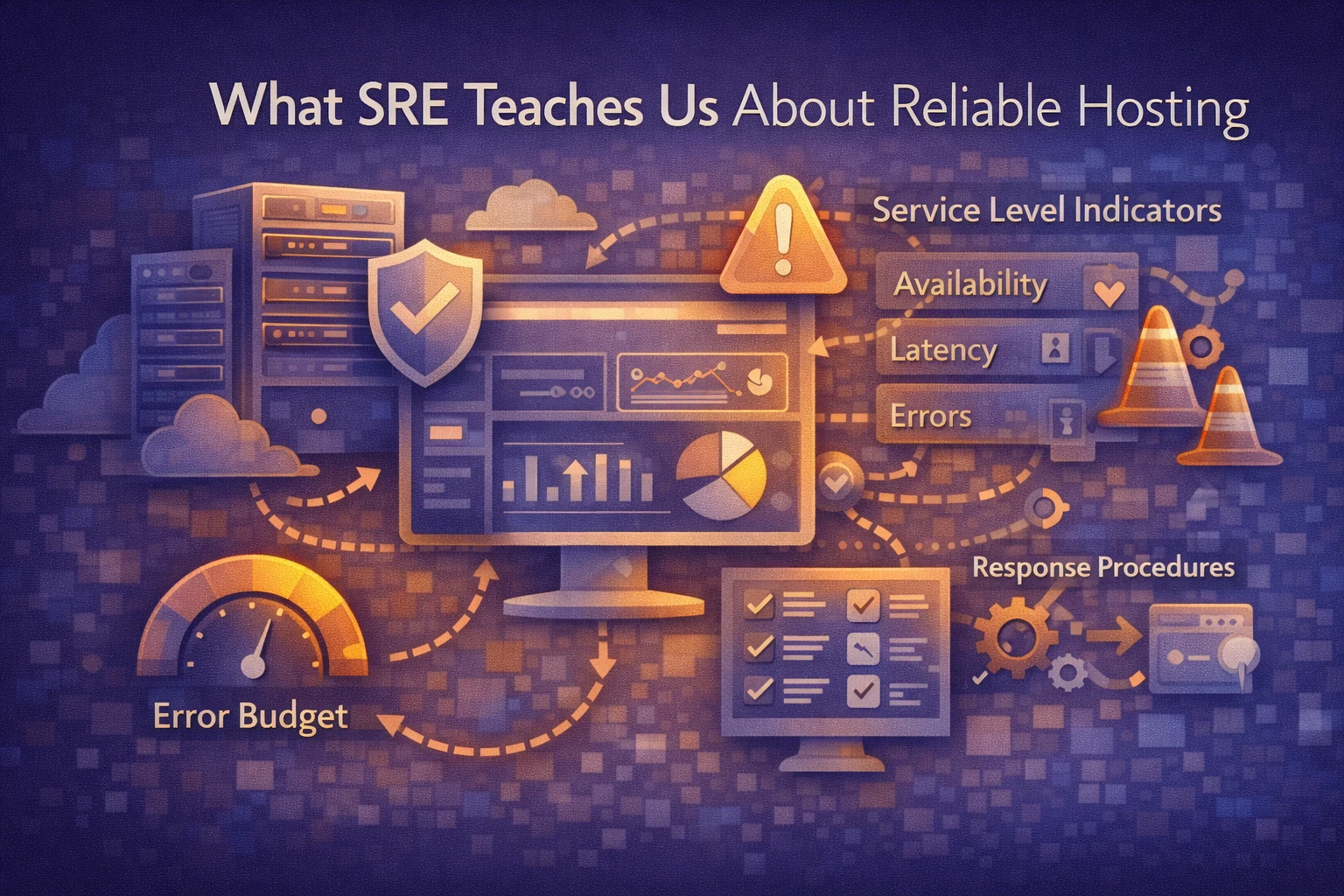
Flat illustration showing site reliability engineering concepts with monitoring dashboards, alerting systems, service metrics, and resilient hosting infrastructure.

Reliable hosting is often misunderstood. Many teams focus on uptime percentages, server specs, or monitoring dashboards. As long as services are running, the system is considered healthy. Site Reliability Engineering (SRE) challenges this thinking. At Wisegigs.eu, we see that the most reliable hosting environments are not the ones with the most metrics, but the ones […]

Monitoring Is What Makes Hosting Reliable

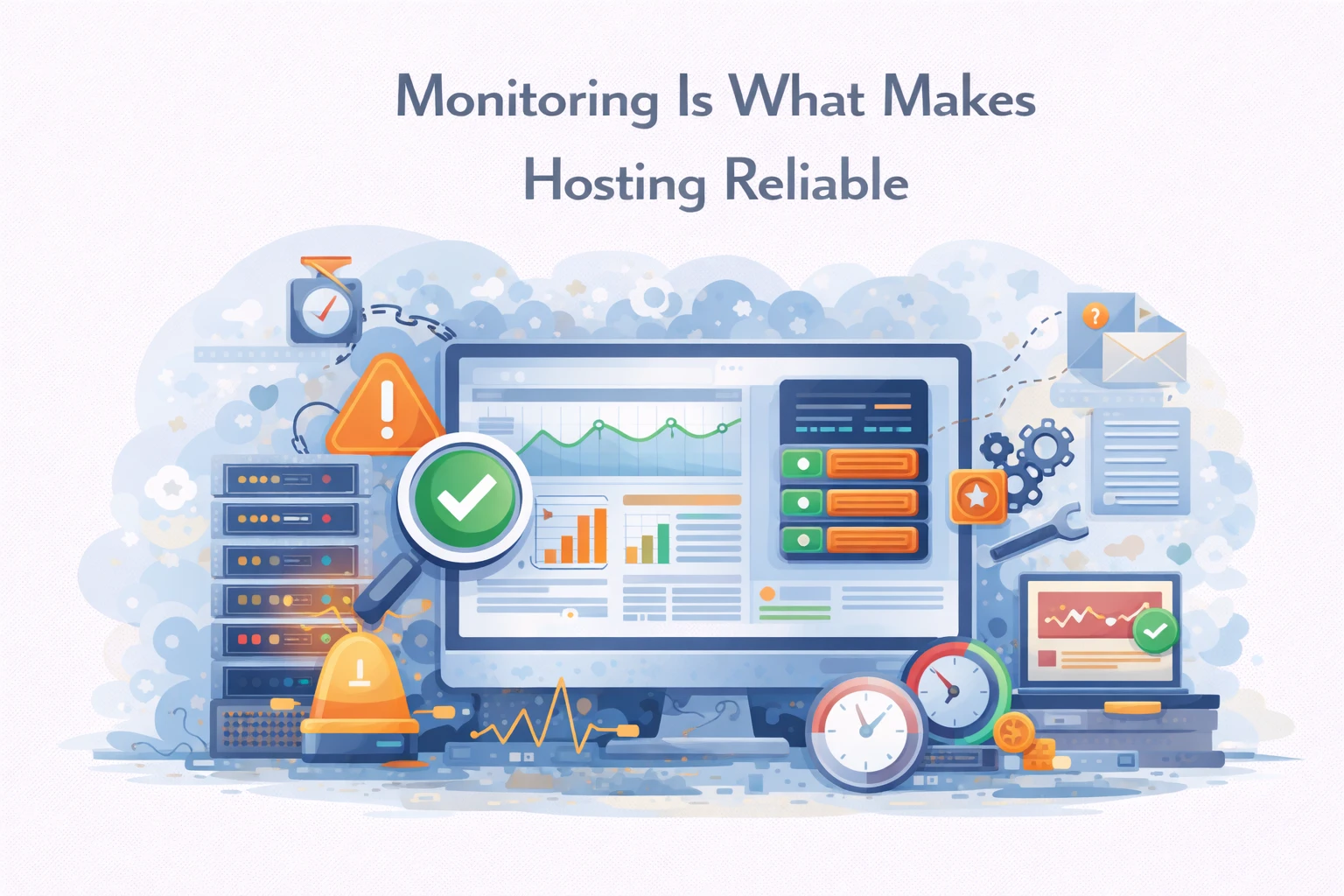
Illustration showing server monitoring dashboards, performance metrics, and alert indicators representing how monitoring ensures reliable hosting and system stability.

Monitoring is what makes hosting reliable. Without it, servers appear stable while problems quietly grow underneath. Many teams assume that uptime alone defines reliability. In reality, reliability depends on visibility, early detection, and fast response. Hosting environments rarely fail suddenly. Instead, they degrade slowly due to resource exhaustion, misconfiguration, or unnoticed errors. Without monitoring, these […]

How SRE Reduces Incident Frequency

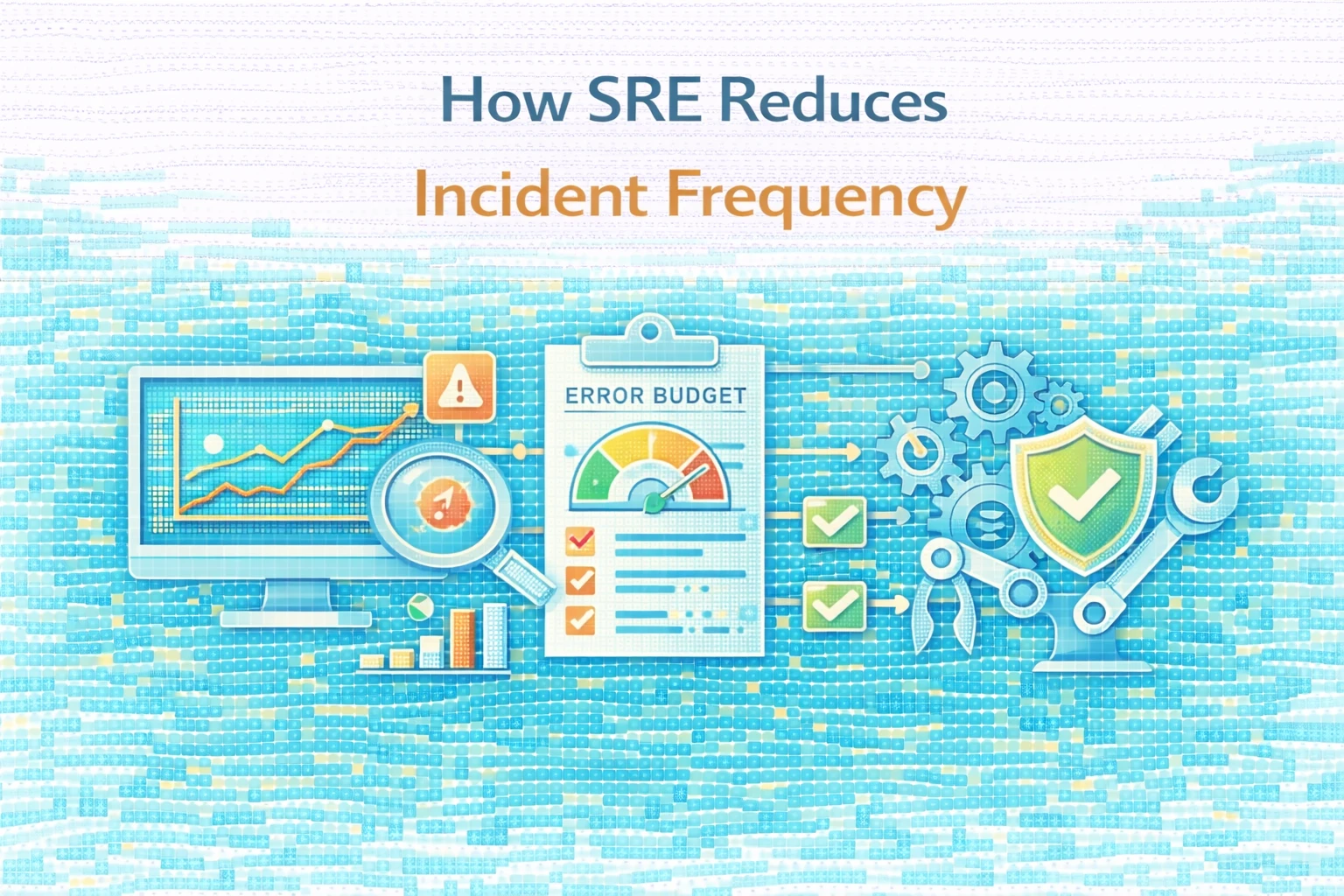
Flat illustration showing how SRE reduces incident frequency.

Most teams try to reduce incidents by reacting faster. They add alerts, expand on-call rotations, and improve runbooks. While these steps help with recovery, they rarely reduce how often incidents occur in the first place. At Wisegigs.eu, the biggest reliability gains do not come from better reaction. They come from Site Reliability Engineering (SRE) practices […]

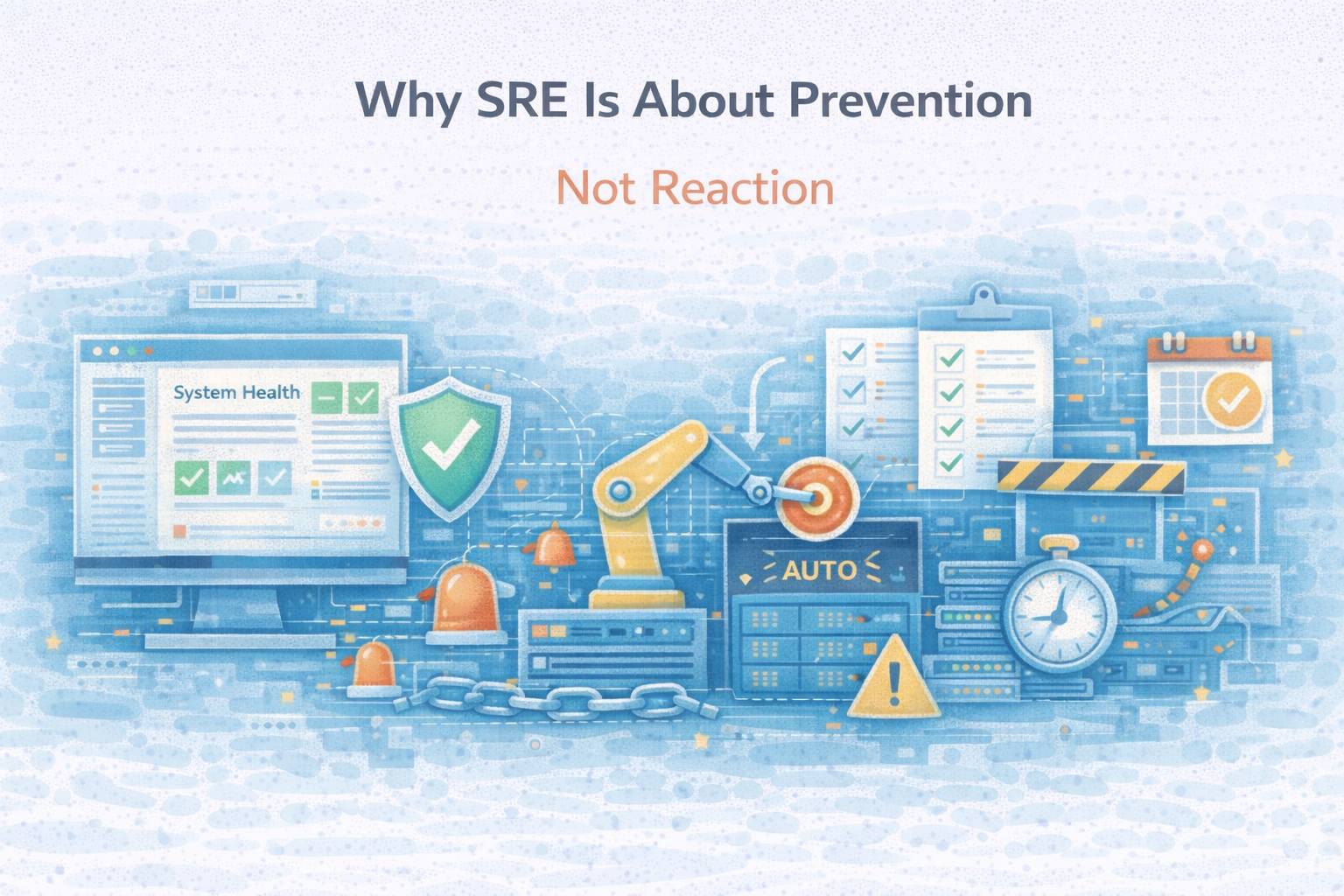
Why SRE Is About Prevention, Not Reaction

Flat illustration showing SRE focused on preventing incidents rather than reacting to failures.

Most teams discover Site Reliability Engineering during an incident. Something breaks. Alerts fire. Users complain. Engineers scramble to restore service. Afterward, the incident is labeled an “outage,” and monitoring thresholds get tweaked. That approach misses the point. At Wisegigs.eu, SRE is not treated as a faster way to react to failures. It is treated as […]

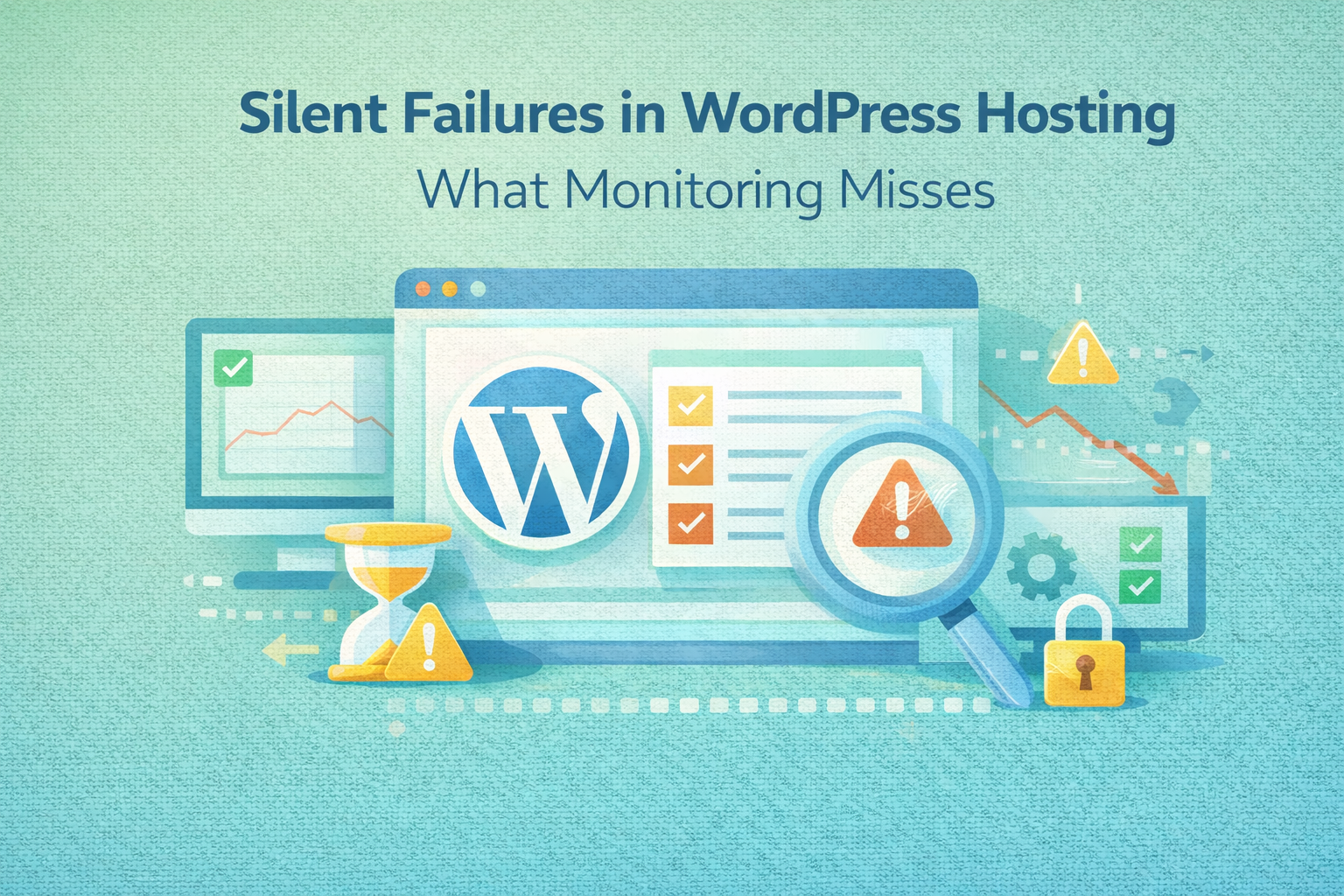
Silent Failures in WordPress Hosting: What Monitoring Misses

Flat editorial illustration showing hidden WordPress hosting failures that monitoring systems often miss.

Most WordPress outages don’t start with a crash. They start quietly — with performance degradation, partial failures, and user-visible issues that never trigger alerts. Pages still load. Uptime checks stay green. But conversions drop, error rates climb, and user trust erodes. At Wisegigs.eu, we see silent failures as the most expensive class of hosting problems, […]

How to Build a Reliable Monitoring Stack for WordPress Servers (SRE Best Practices)

Illustration showing WordPress performance monitoring dashboards detecting early regressions before users experience slowdowns.

Performance regressions rarely announce themselves clearly. They usually arrive quietly — a slightly slower TTFB, a gradual rise in PHP execution time, a creeping increase in database latency. By the time users complain, the regression has already existed for days or weeks. In Site Reliability Engineering (SRE), the goal is not just to respond to […]

How to Build a Reliable Monitoring Stack for WordPress Servers (SRE Best Practices)

Illustration showing server dashboards, uptime graphs, alert icons, and WordPress symbols representing monitoring and SRE practices for hosting environments.

Illustration showing server dashboards, uptime graphs, alert windows, and WordPress icons arranged in a clean SRE-style monitoring layout. Building a reliable WordPress environment goes far beyond choosing the right server or caching system. What keeps sites healthy long-term is a robust monitoring stack—one that detects issues early, provides actionable insights, and prevents downtime before users […]

SRE for WordPress Hosting: Practical Monitoring Strategies That Prevent Downtime

Digital illustration showing WordPress hosting monitoring and SRE concepts such as dashboards, charts, and server stability icons.

Keeping a WordPress hosting environment stable is far more than configuring servers and hoping performance remains consistent. Modern reliability depends on Site Reliability Engineering (SRE)—a discipline focused on predictable performance, early detection of issues, and strong operational processes that minimize downtime. At Wisegigs.eu, we apply SRE principles to every hosting environment we manage. Our approach […]

WordPress Monitoring Essentials: Practical SRE Techniques for Uptime and Performance

Flat digital illustration showing monitoring dashboards and SRE tools for WordPress uptime and performance.

Keeping a WordPress site fast and stable requires more than good hosting. Real reliability comes from monitoring, alerting, and structured Site Reliability Engineering (SRE) practices. When you watch your system closely, you prevent downtime before it affects users. This approach reduces risk, protects your brand, and keeps your website performing at its best. At Wisegigs.eu, […]

Coming Soon