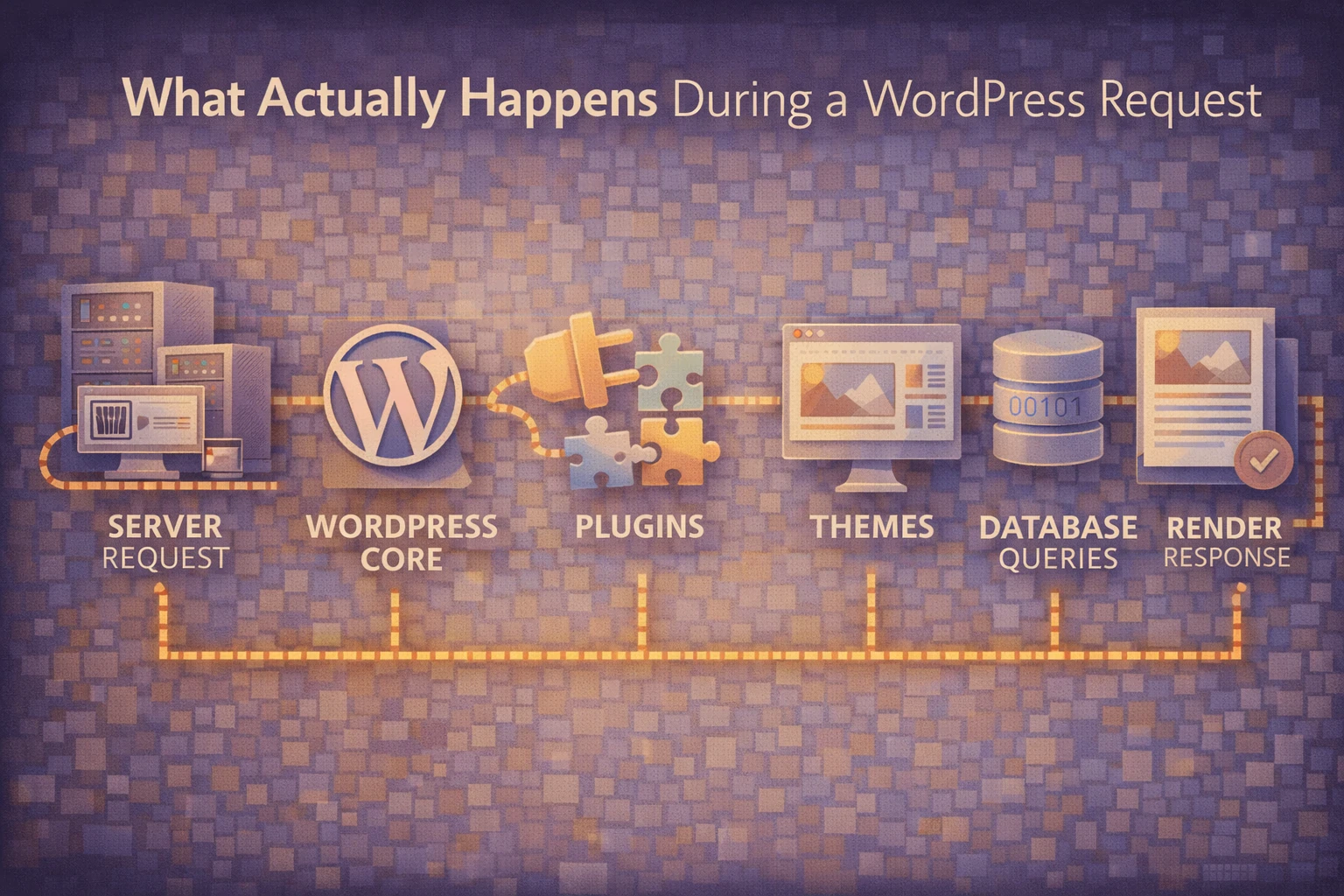
What Actually Happens During a WordPress Request

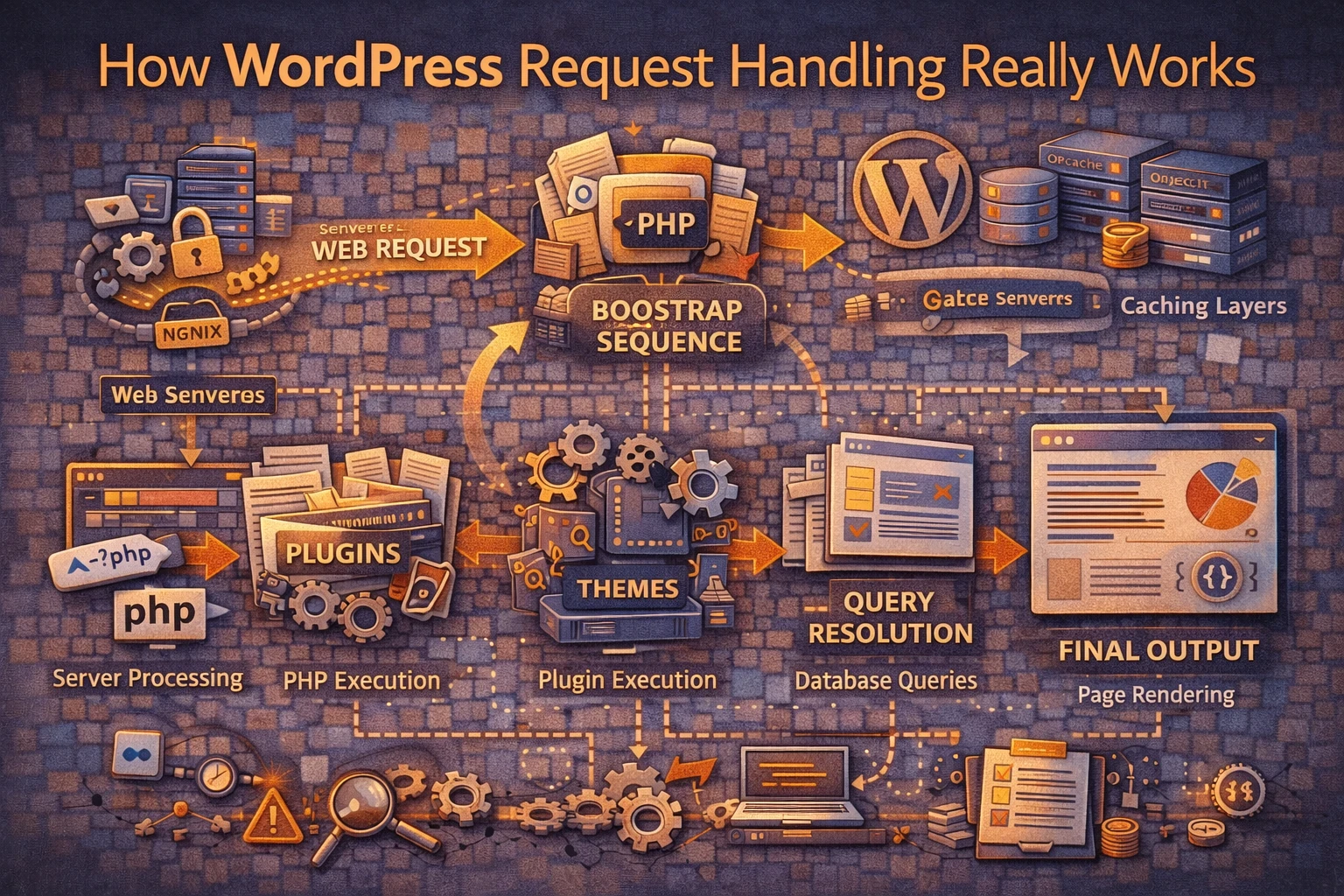
WordPress often feels simple from the outside. A URL is loaded, a page appears, and content renders as expected. Because of this, many teams assume WordPress behaves like a straightforward page renderer. In reality, every WordPress request triggers a complex execution flow that touches core files, configuration, plugins, themes, and the database before anything is […]
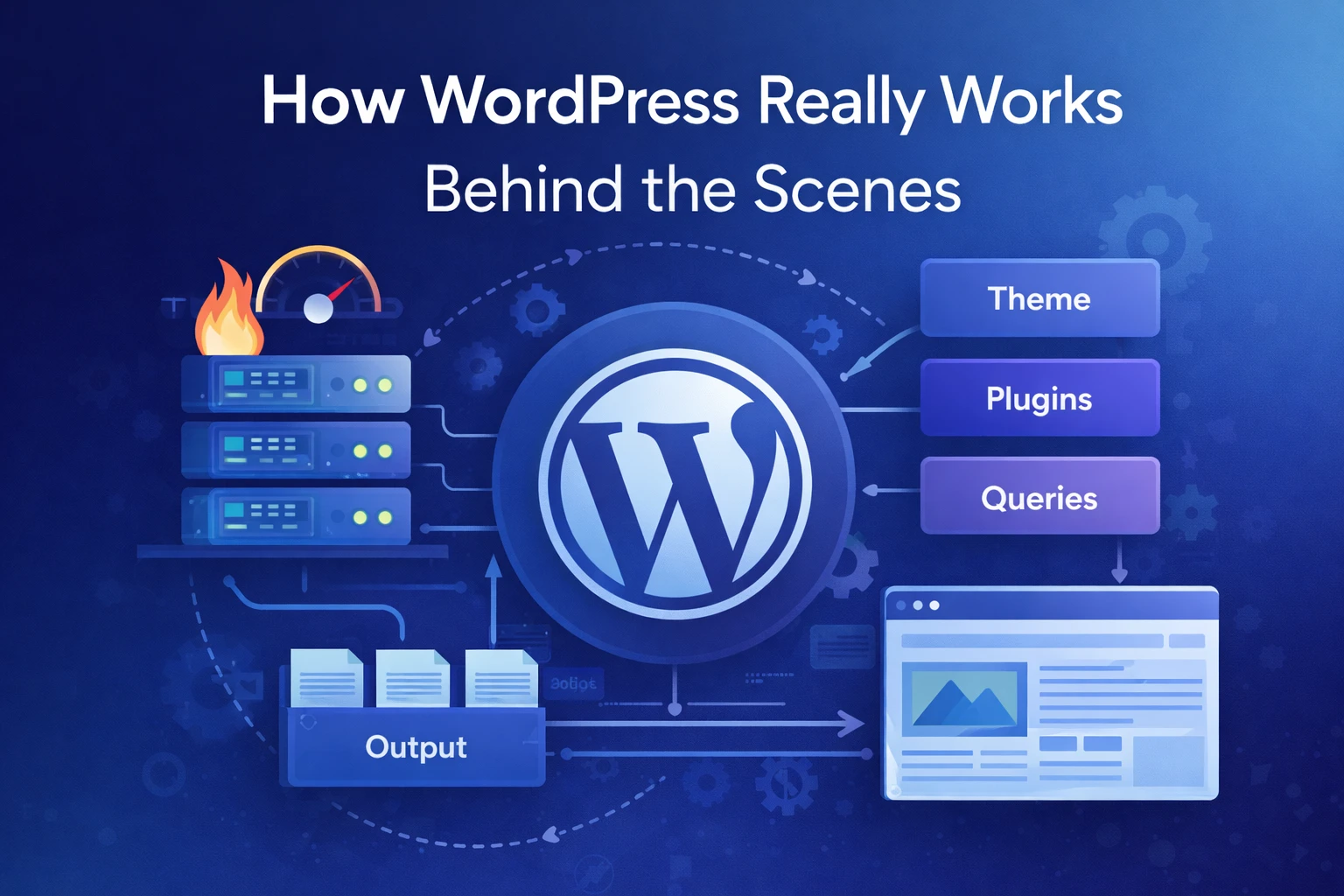
How WordPress Really Works Behind the Scenes

WordPress looks simple on the surface. Pages load. Content publishes. Plugins install. Everything appears to work.Because of this, most people never think about what actually happens behind the scenes. However, that simplicity hides a complex system. At Wisegigs, we often work with WordPress sites that function correctly but are structurally fragile. They work today, but […]
Why “It Works” Is Not a WordPress Strategy

“It works” is the most common justification in WordPress development. The site loads. Pages render. Clients can publish content. From the outside, everything appears fine. As a result, development decisions are rarely questioned as long as nothing is visibly broken. At Wisegigs.eu, many WordPress failures begin exactly this way. Systems that “work” today quietly accumulate […]
Why WordPress Development Often Ignores Maintainability

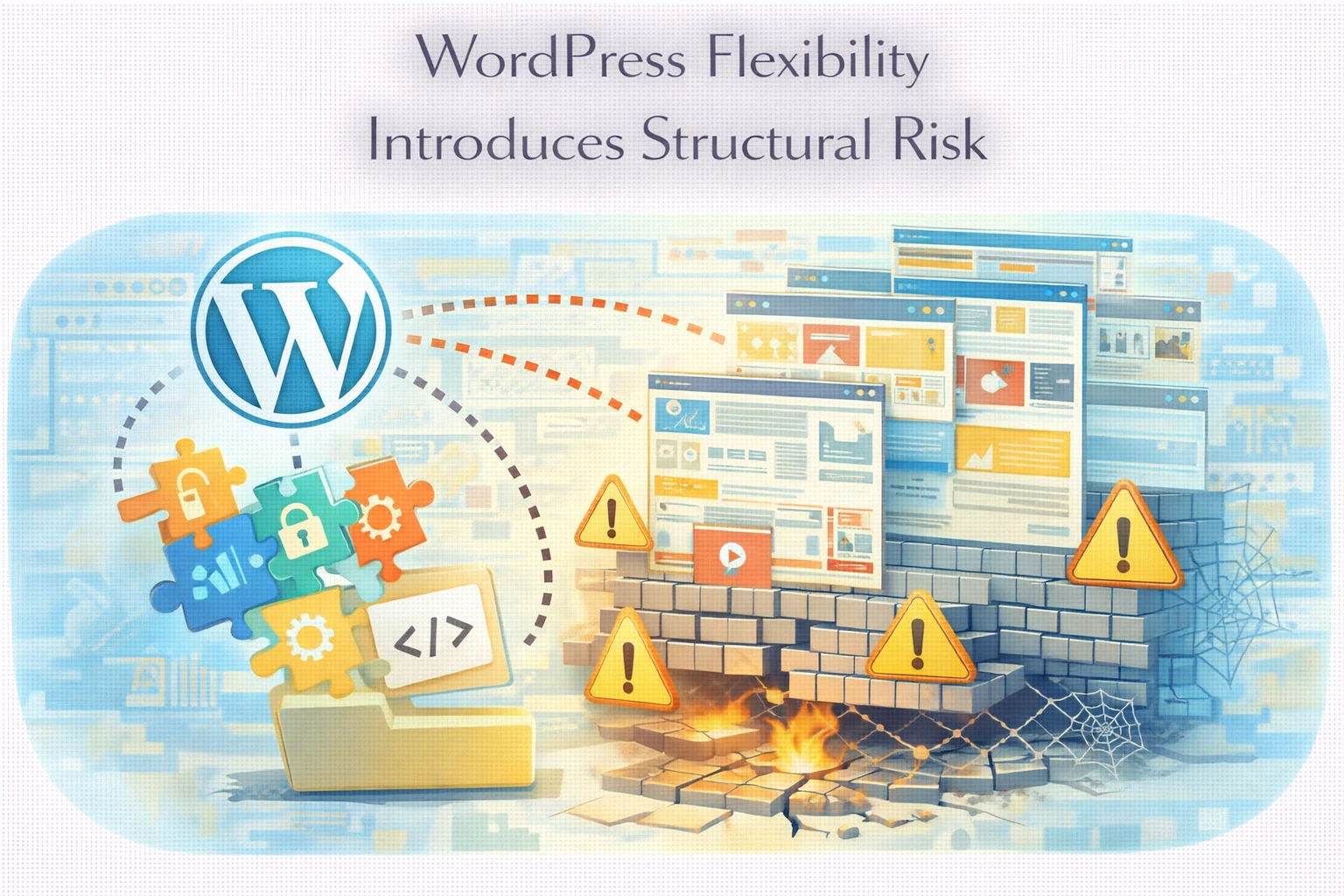
WordPress development usually starts with good intentions. A feature request. A deadline. A client requirement. A plugin that “just works.” Over time, however, many WordPress sites become increasingly fragile, harder to change, and risky to maintain. This is rarely because developers lack skill.It happens because maintainability is deprioritized in favor of speed and visible progress. […]
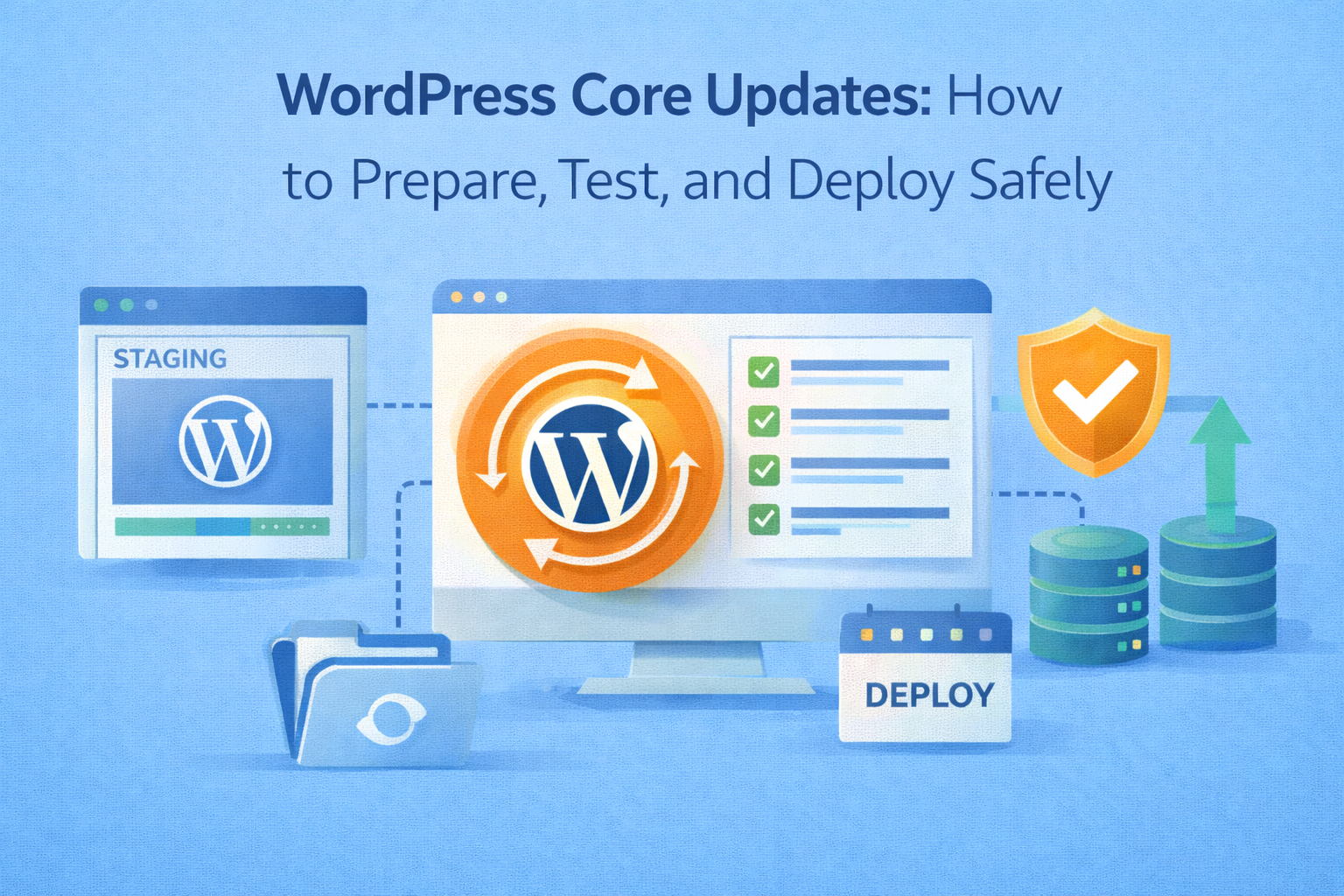
WordPress Core Updates: How to Prepare, Test, and Deploy Safely

WordPress core updates are one of the most underestimated operational risks in WordPress projects. While most updates appear routine, even minor releases can introduce compatibility issues, performance regressions, or subtle breaking changes — especially on sites with custom code, plugins, or complex hosting setups. The difference between a smooth update and a production incident is […]
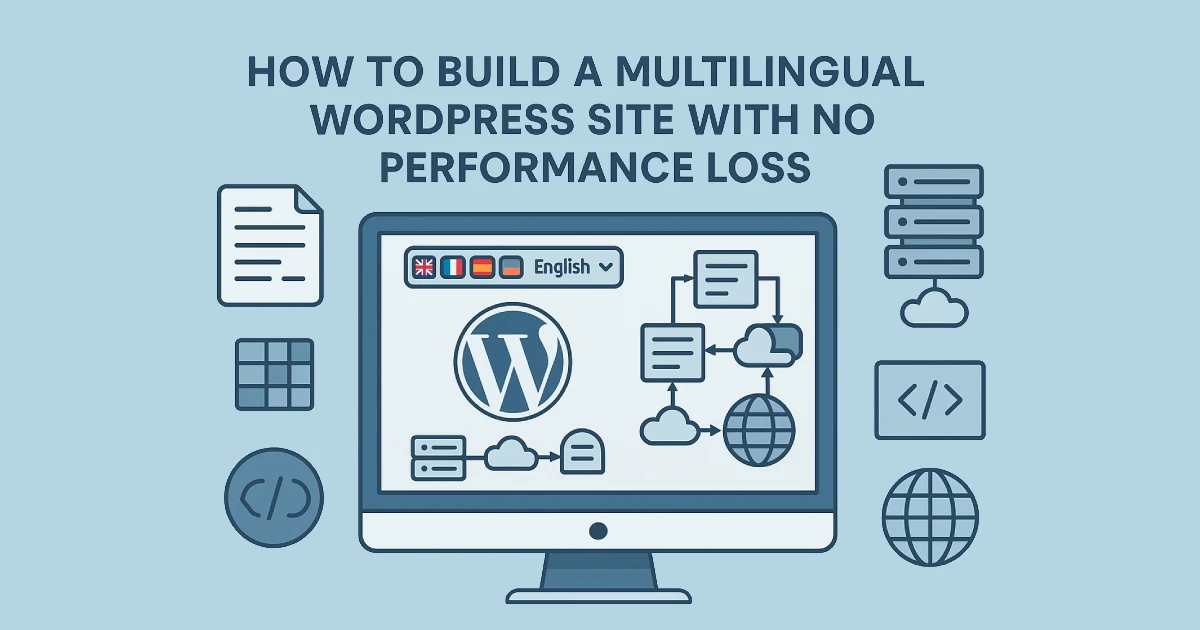
How to Build a Multilingual WordPress Site with No Performance Loss

Illustration showing language switchers, translation architecture diagrams, WordPress multisite structures, and caching layers in a clean technical layout. Multilingual WordPress sites often suffer performance issues — slow database queries, oversized DOM, duplicated content, and unnecessary translation overhead. Many teams rely on translation plugins that load additional scripts, rewrite URLs inefficiently, or duplicate entire content tables. […]
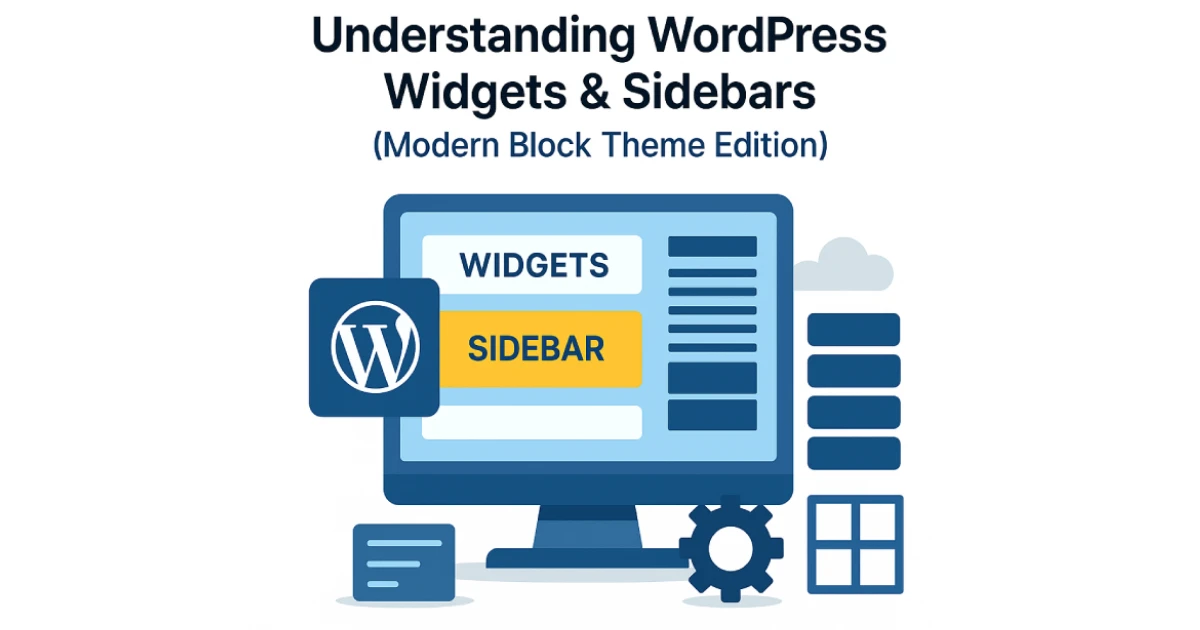
Understanding WordPress Widgets & Sidebars (Modern Block Theme Edition)

The WordPress ecosystem has changed significantly with the transition from classic themes to modern block themes. Sidebars, once defined in functions.php, are now fully block-based and visually editable inside the Site Editor. Widgets still exist—but in a very different form. Many website owners and developers are unsure how these components work today, especially when migrating […]
Understanding the WordPress Theme Structure: A Complete Guide

A WordPress theme defines how a website looks, behaves, and presents content to users. While plugins extend functionality, themes control layout, styling, and the overall user experience. Whether you’re maintaining an existing site or preparing for development work, understanding the theme structure helps you troubleshoot issues, improve performance, and create a more reliable WordPress environment. […]
Elementor Page Builder Best Practices for Faster, Cleaner WordPress Sites

Elementor is one of the most popular WordPress page builders for a reason. Its drag-and-drop interface allows anyone to create visually appealing pages without touching a single line of code. But flexibility comes with responsibility. Without strategy, it’s easy to create sites that are slow, bloated, and hard to maintain. At Wisegigs.eu, we focus on […]