
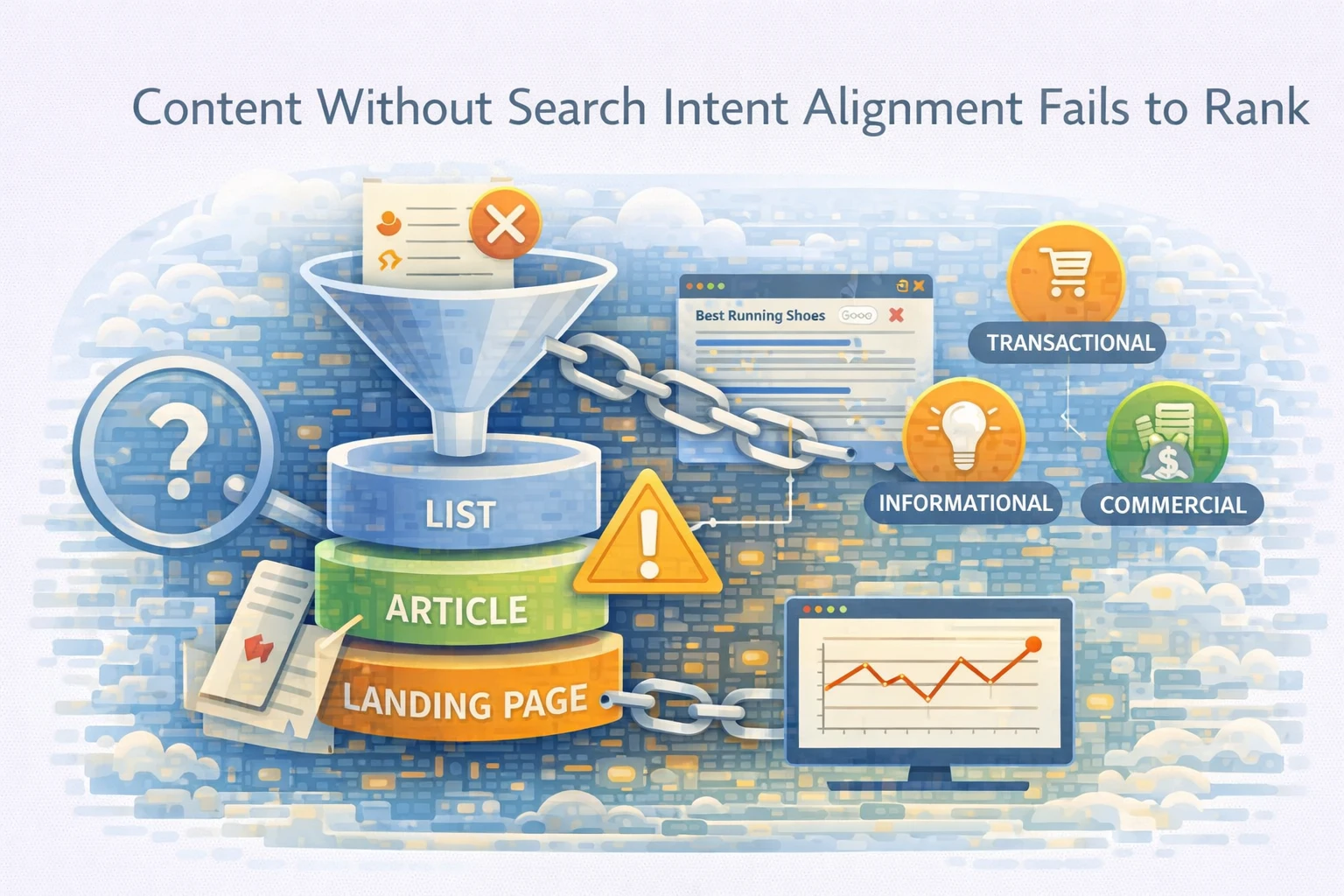
Publishing content does not guarantee search visibility.
Many websites produce large volumes of articles, targeting keywords and topics they believe are relevant. However, despite consistent publishing, rankings remain unstable or fail to improve.
This outcome is common.
Search performance depends less on content quantity and more on intent alignment.
At Wisegigs.eu, SEO audits frequently reveal content strategies that focus on keyword coverage without understanding what users actually expect from a query. As a result, pages fail to satisfy search intent and struggle to rank consistently.
Search engines evaluate relevance, not effort.
Search Engines Prioritize Intent, Not Just Keywords
Modern search engines interpret meaning.
Algorithms no longer rely solely on keyword matching. Instead, they analyze query intent and evaluate whether content satisfies user expectations.
This shift changes how content should be created.
Two pages may target the same keyword. However, the page that better aligns with user intent will rank higher.
Google’s Search Central documentation explains how content relevance depends on usefulness and intent satisfaction:
https://developers.google.com/search/docs/fundamentals/creating-helpful-content
Therefore, keyword presence alone does not guarantee visibility.
Search Intent Defines Content Expectations
Every search query reflects a goal.
Users may want to learn, compare, evaluate, or complete a transaction. These goals define the type of content they expect to see.
Common intent categories include:
informational (learning or understanding)
navigational (finding a specific page)
transactional (completing an action)
commercial (evaluating options before purchase)
Each category requires a different content structure.
If content format does not match intent, users disengage quickly.
Keyword Matching Without Intent Alignment Fails
Targeting keywords without understanding intent creates weak content.
For example, a page targeting a “how to” query but presenting a product page will fail to satisfy user expectations. Similarly, a long-form article may not perform well for a query expecting a quick answer.
This mismatch reduces relevance.
Search engines detect this through user behavior signals such as bounce rate, dwell time, and interaction patterns.
As a result, rankings decline.
Content Format Must Match Query Type
Intent influences content structure.
Different queries require different formats:
tutorials for instructional queries
comparison pages for commercial research
landing pages for transactional intent
concise answers for quick queries
Matching format to intent improves engagement.
For example:
A query like “how to optimize WordPress speed” expects a structured guide.
A query like “best VPS hosting providers” expects comparisons.
When format aligns with expectations, users remain engaged.
SERP Analysis Reveals Intent Signals
Search results provide direct insight into intent.
Before creating content, analyzing the search engine results page (SERP) helps identify what type of content ranks for a query.
Key signals include:
content format (guides, lists, product pages)
page length and structure
presence of featured snippets
use of images or videos
title patterns across top results
These signals indicate what search engines consider relevant.
Ahrefs research highlights SERP analysis as a critical step in content planning:
https://ahrefs.com/blog/search-intent/
Ignoring SERP patterns increases the risk of misalignment.
Misaligned Content Creates Ranking Instability
Content that partially matches intent may rank temporarily.
However, rankings often fluctuate.
Search engines continuously evaluate user satisfaction. If competing pages better match intent, rankings shift accordingly.
This explains why some pages:
rank briefly and then decline
fail to maintain stable positions
lose visibility after algorithm updates
Stability requires consistent intent alignment.
Engagement Signals Reinforce Intent Matching
User behavior influences rankings.
Search engines measure how users interact with content. If users quickly return to search results, the content likely failed to meet expectations.
Positive signals include:
longer dwell time
lower bounce rate
deeper page interaction
repeated visits
These signals indicate that content satisfies intent.
Consequently, engagement reinforces ranking performance.
Content Strategy Requires Intent Mapping
Effective SEO strategies map content to intent.
Instead of producing content based solely on keywords, teams analyze the purpose behind each query. This approach ensures that content structure, messaging, and format align with user expectations.
Intent mapping typically involves:
grouping keywords by intent type
analyzing SERP patterns
defining appropriate content formats
aligning messaging with user goals
This process improves relevance across all content.
At Wisegigs.eu, content planning begins with intent analysis rather than keyword selection.
What Reliable SEO Content Strategies Prioritize
Successful content strategies focus on alignment.
Effective approaches typically include:
understanding user intent before writing
matching content format to query type
analyzing SERPs before content creation
optimizing engagement and readability
updating content based on performance data
These practices ensure content remains relevant.
Relevance drives rankings.
Conclusion
Content volume alone does not improve SEO performance.
Search visibility depends on how well content aligns with user intent.
To recap:
search engines prioritize relevance over keyword usage
intent defines content expectations
keyword targeting without intent fails
content format must match query type
SERP analysis reveals intent signals
engagement reinforces ranking performance
intent mapping improves content strategy
At Wisegigs.eu, effective SEO content strategies focus on understanding user behavior, aligning content with intent, and continuously refining relevance.
If your content fails to rank despite targeting the right keywords, the issue may be intent misalignment.
Need help improving SEO performance or content strategy? Contact Wisegigs.eu