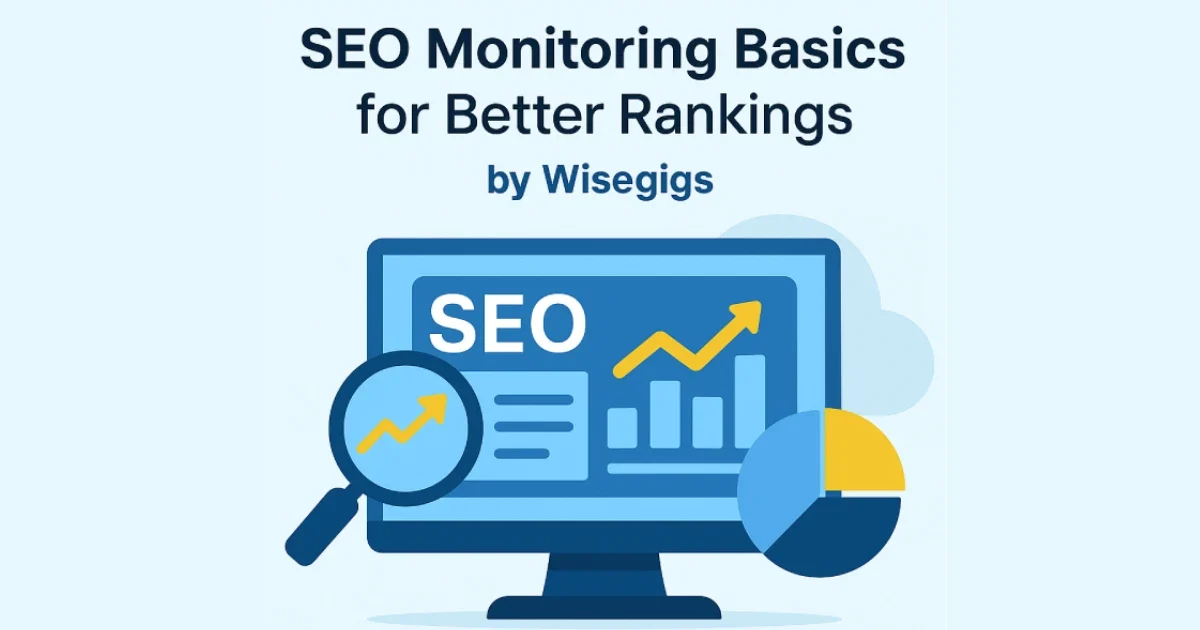
Monitoring your SEO performance is one of the most important habits you can build as a WordPress site owner. Traffic, rankings, and search visibility change constantly — and without consistent monitoring, small issues can turn into major losses in revenue, conversions, and brand awareness.
At Wisegigs.eu, we help teams set up reliable SEO tracking systems that reveal what’s really happening behind the scenes. This guide explains the core metrics to watch, the tools that matter most, and the practical steps that help you spot opportunities and prevent ranking drops.
1. Understand What SEO Monitoring Really Means
SEO monitoring is more than checking keyword positions. It’s the process of tracking:
Organic traffic trends
Keyword rankings and volatility
Search visibility
Landing page performance
Technical health signals
User behavior changes
Competitor shifts
Monitoring gives you clarity, protects your momentum, and removes guesswork from your SEO decisions.
2. Track Organic Traffic With Real Signals, Not Guesswork
Organic traffic shows whether your SEO strategy is working. When traffic drops, it often points to:
Algorithm updates
Site speed issues
Content decay
Indexing problems
Ranking loss
Competitor improvements
Three essential places to track this:
Google Search Console
Shows impressions, clicks, average position, page performance, and search queries.
Google Analytics 4 (GA4)
Reveals user behavior, engagement, conversions, and traffic quality.
Ahrefs or Similar Tools
Helps validate traffic patterns, keyword trends, and competitor movements.
Ahrefs’ blog highlights how tracking organic traffic alongside keyword visibility paints a much clearer picture of performance:
https://ahrefs.com/blog/seo-metrics/
If you rely on paid tools alone, you miss the deeper insights GA4 and Search Console provide — so use all three together when possible.
3. Monitor Keyword Rankings the Right Way
Keyword rankings fluctuate daily, so your goal isn’t perfection — it’s consistency and upward trends. Ranking tracking works best when you watch:
Primary keywords
Long-tail variations
Local search positions (if applicable)
Featured snippets
Competitor ranking movement
New keyword opportunities
Content that’s slipping downward
Good tracking allows you to make better optimization decisions — and prevents ranking losses from going unnoticed.
4. Review Search Intent Alignment
Even high-ranking pages fail if they don’t satisfy search intent. Google rewards pages that match:
Informational intent — users want answers, explanations, guides
Navigational intent — users want a specific brand or page
Commercial intent — users want comparisons or research
Transactional intent — users are ready to buy
Search Engine Journal notes that search intent is one of the strongest ranking factors today, and aligning your content with user expectations leads to better engagement and higher conversions:
https://www.searchenginejournal.com/search-intent/
When rankings drop unexpectedly, intent mismatches are a common cause.
5. Track Indexing and Technical Health
Even perfect content won’t rank if Google can’t crawl or index your site.
Monitor:
Index coverage reports
Page experience signals
Mobile usability
Core Web Vitals
Page depth and navigation
Structured data
Robots.txt changes
Sitemap updates
Google Search Console provides all the insights you need here — and it’s free.
If indexing errors rise, fix them immediately to prevent larger SEO issues.
6. Watch for Content Decay and Refresh Opportunities
No matter how strong your content is, interest and competition change over time. Content decay happens when posts gradually decline in traffic, rankings, or relevance.
Look for:
Slower growth
Lower click-through rates
Falling impressions
Weaker engagement
Refreshing old content often produces fast wins — especially when the topic is still relevant but competitors have updated their pages more recently.
At Wisegigs.eu, we review decayed content quarterly to restore visibility and maintain search momentum.
7. Review Competitor Performance Regularly
Competitor SEO analysis reveals:
New keywords they’re targeting
Pages they recently improved
Backlinks they acquired
Topics gaining traction
SERP features they captured
Tools like Ahrefs and SEMrush make competitor insights accessible even to non-technical users.
If your competitor rankings surge, that trend is often visible weeks before your own rankings move.
8. Build a Simple SEO Monitoring Routine
A clean monitoring routine keeps your strategy organized and consistent.
Weekly
Check rankings for major keywords
Review Search Console performance
Scan for indexing issues
Monthly
Analyze traffic trends in GA4
Review top landing pages
Compare against competitors
Check content decay
Quarterly
Refresh outdated pages
Re-evaluate keyword priorities
Audit Core Web Vitals and site speed
This structured workflow ensures you never lose visibility into how your SEO is performing.
Conclusion
SEO monitoring is not optional — it’s essential. When you track traffic trends, keyword performance, search intent, indexing health, and competitor behavior, you gain a complete picture of your search performance.
A reliable monitoring system allows you to:
Catch ranking drops early
Improve underperforming content
Understand user behavior
Prioritize high-impact improvements
Protect your long-term SEO stability
If you want help setting up a reliable, data-driven SEO monitoring system for your business, Contact us today.